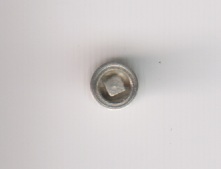
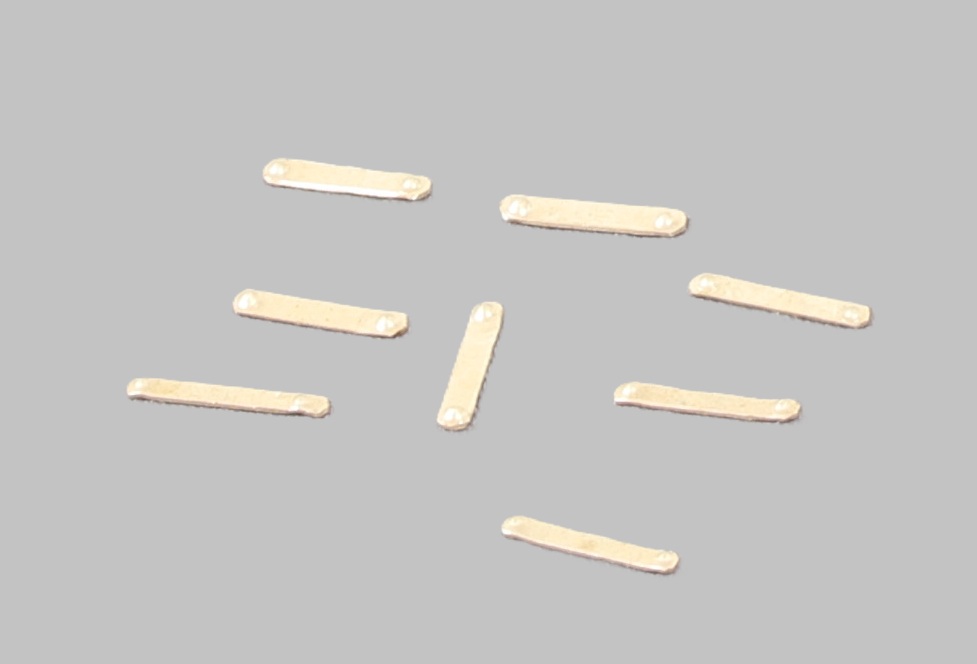
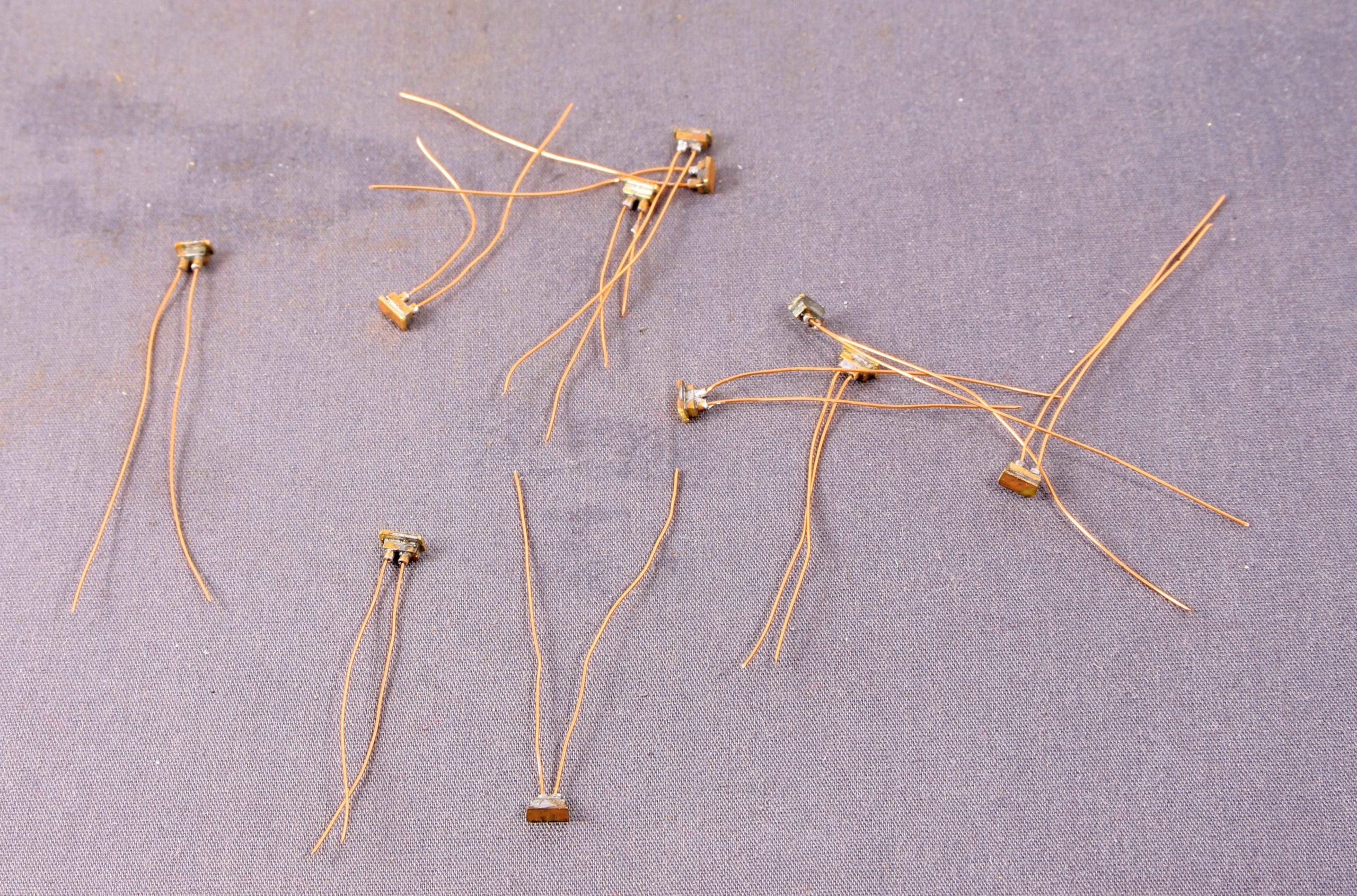
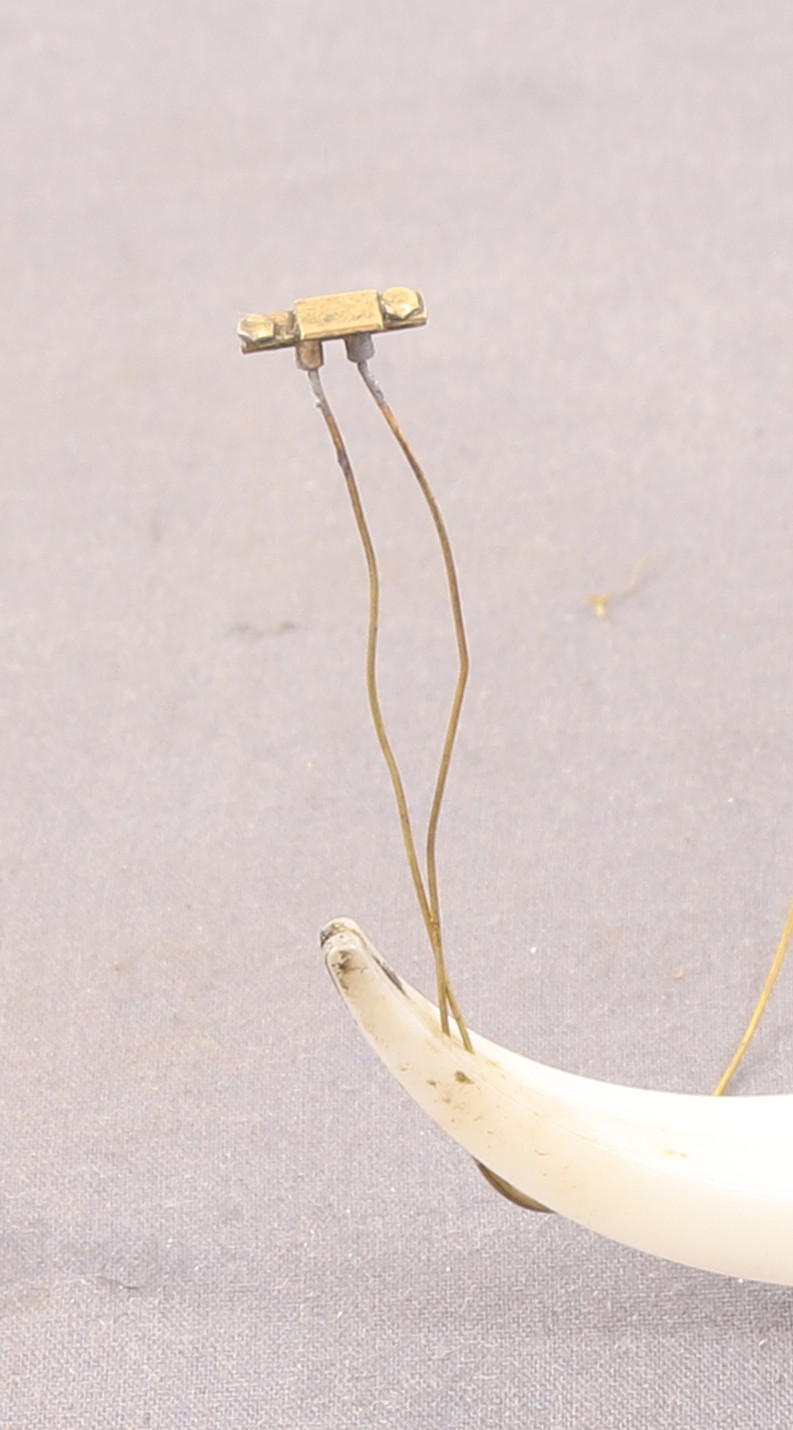
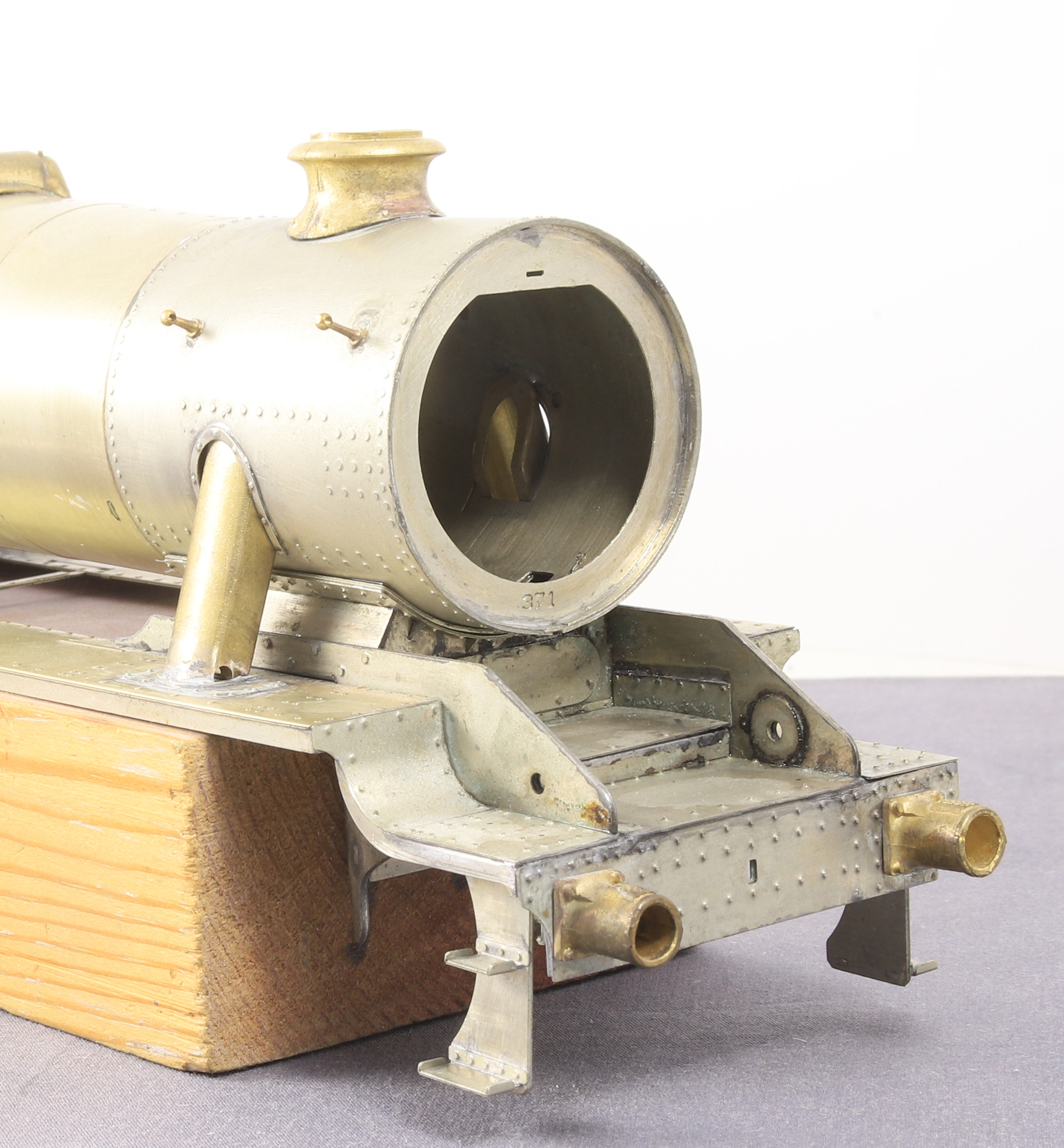
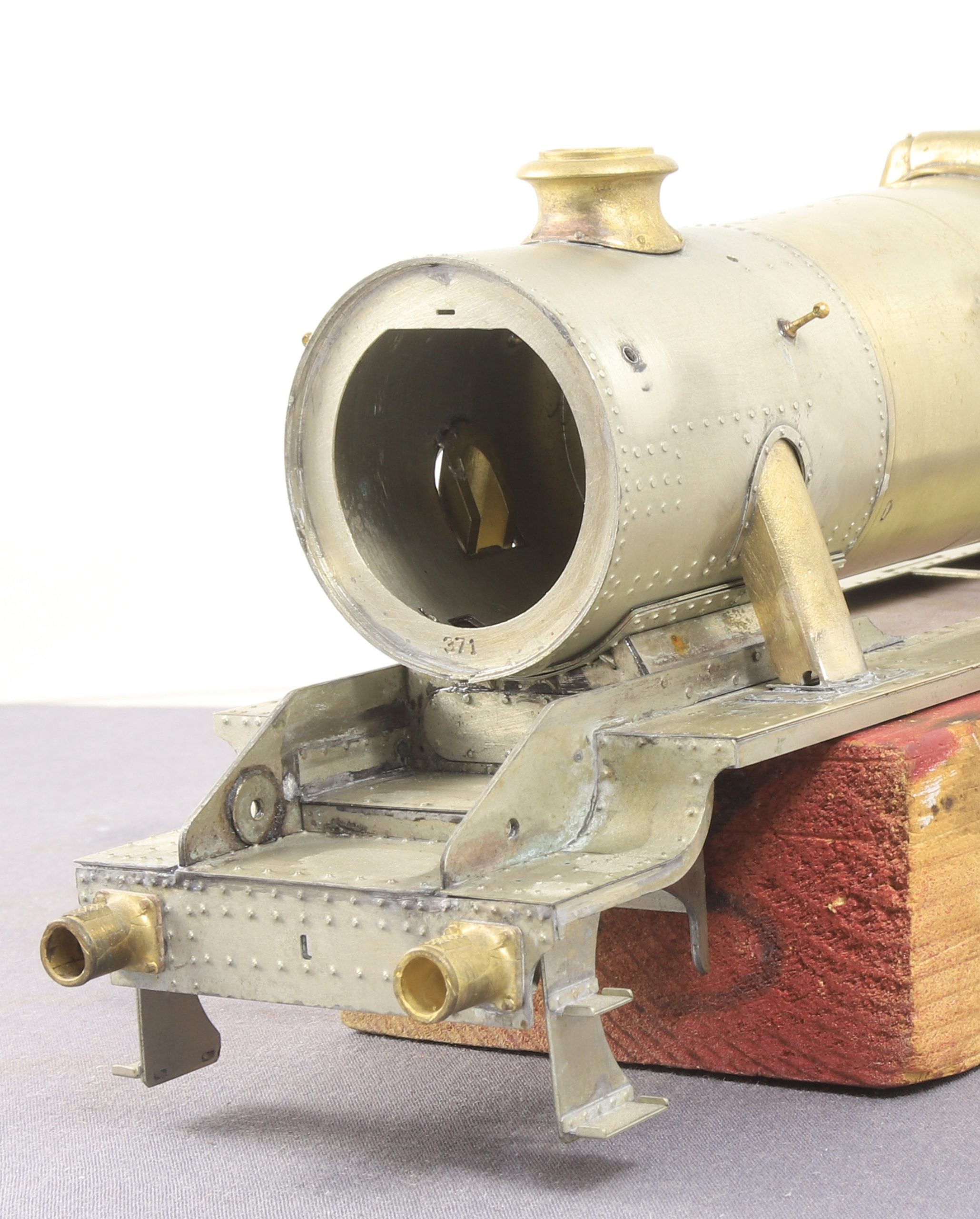
Having made them I figured it made sense to fit them before fitting other more vulnerable bits.
Not sure why since I have been concentrating on the left side of the loco so far but I started on the right hand side.
All went according to plan
Not so, on the left hand side. I can only assume that the wall thickness of the firebox castings is thinner on this side.
I couldn’t live with them as is so I had a choice attempt to file them down or remake them a bit shorter and put the longer ones in the spares box. Since I was still pretty much set up to make more, I elected for the latter.
Even with doing a test example to check that I had made the correct adjustments to my measurements it still took less than half an hour to make enough for the right hand side.
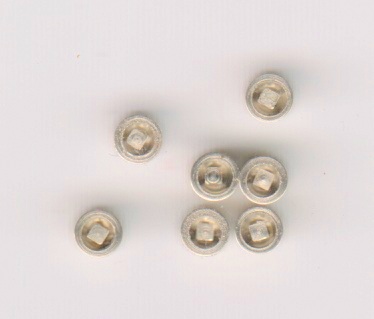
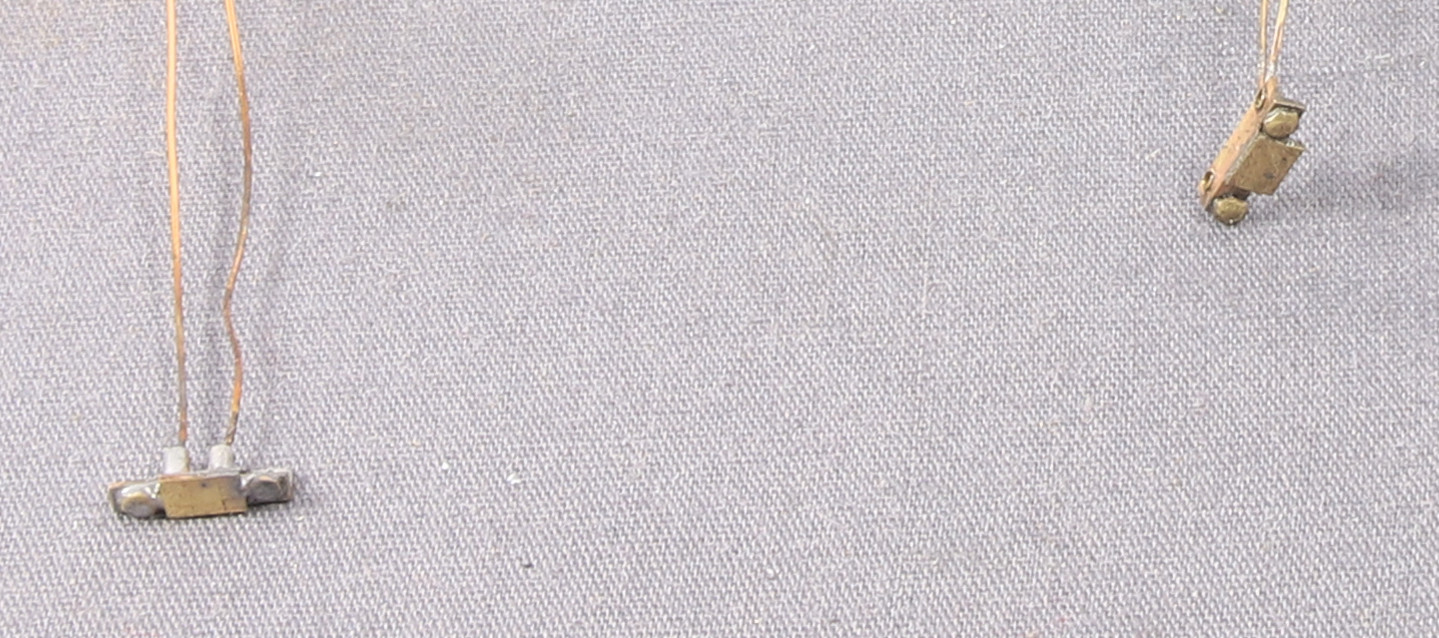
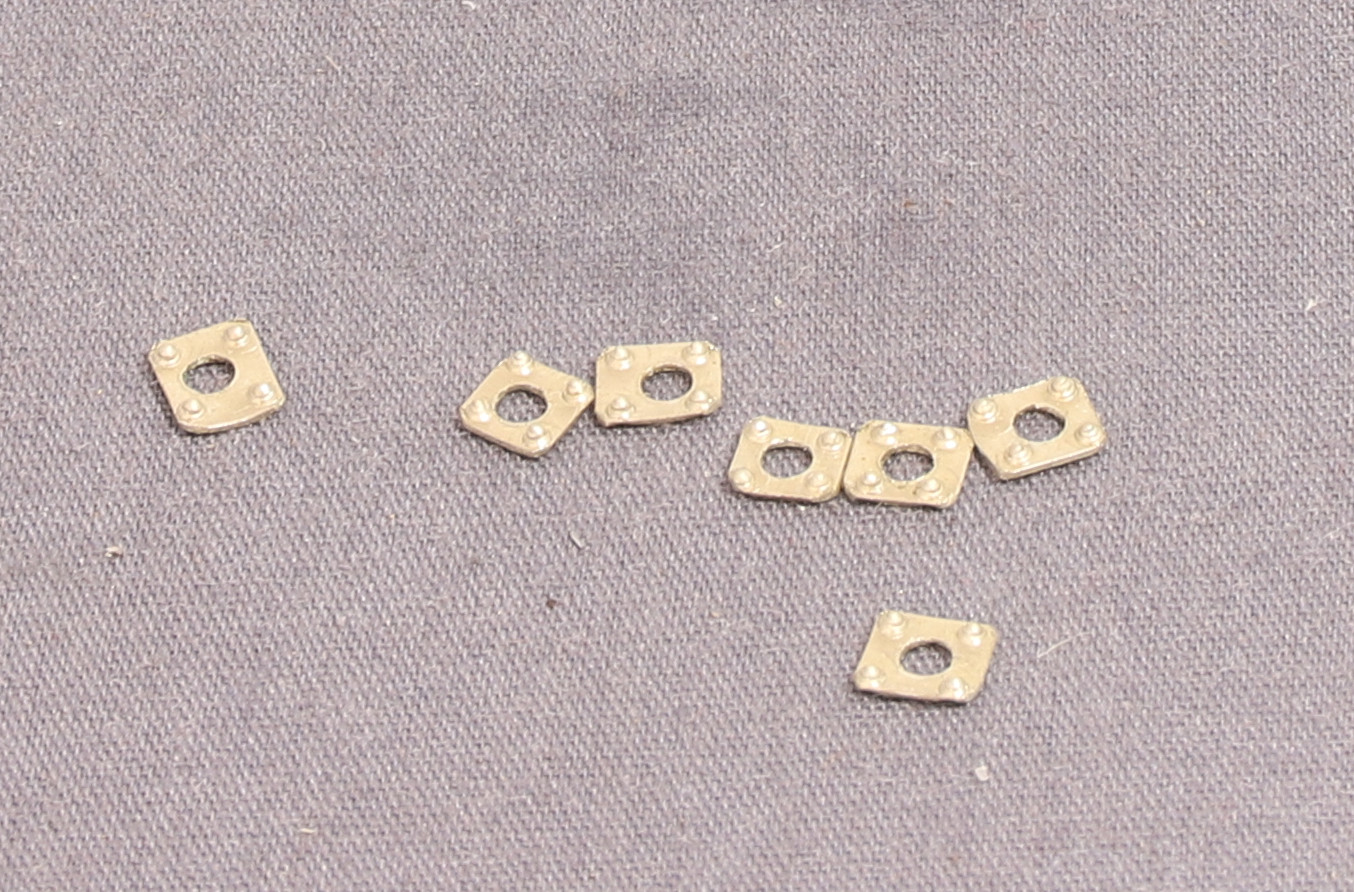
While I was in the midst of making the washout plugs for the 8F I had a look through the kits stash to see if I needed any for other models while I was on with them. most are covered but I do need some for my B16. These are slightly different in that they are inset with a raised rim. Having made a number of spares it was a relatively simple job to turn half a dozen or so collars that the washout plugs would fit into.
Washout plugs with collars
The idea being that I will solder the inner plug into the collar then cut the base off allowing them to be fit into the loco fire box. In the meantime they are now in the B16 box, in a little bag awaiting their day to shine
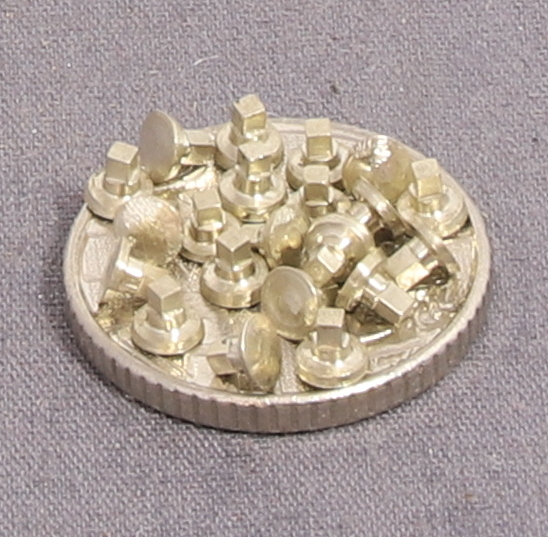
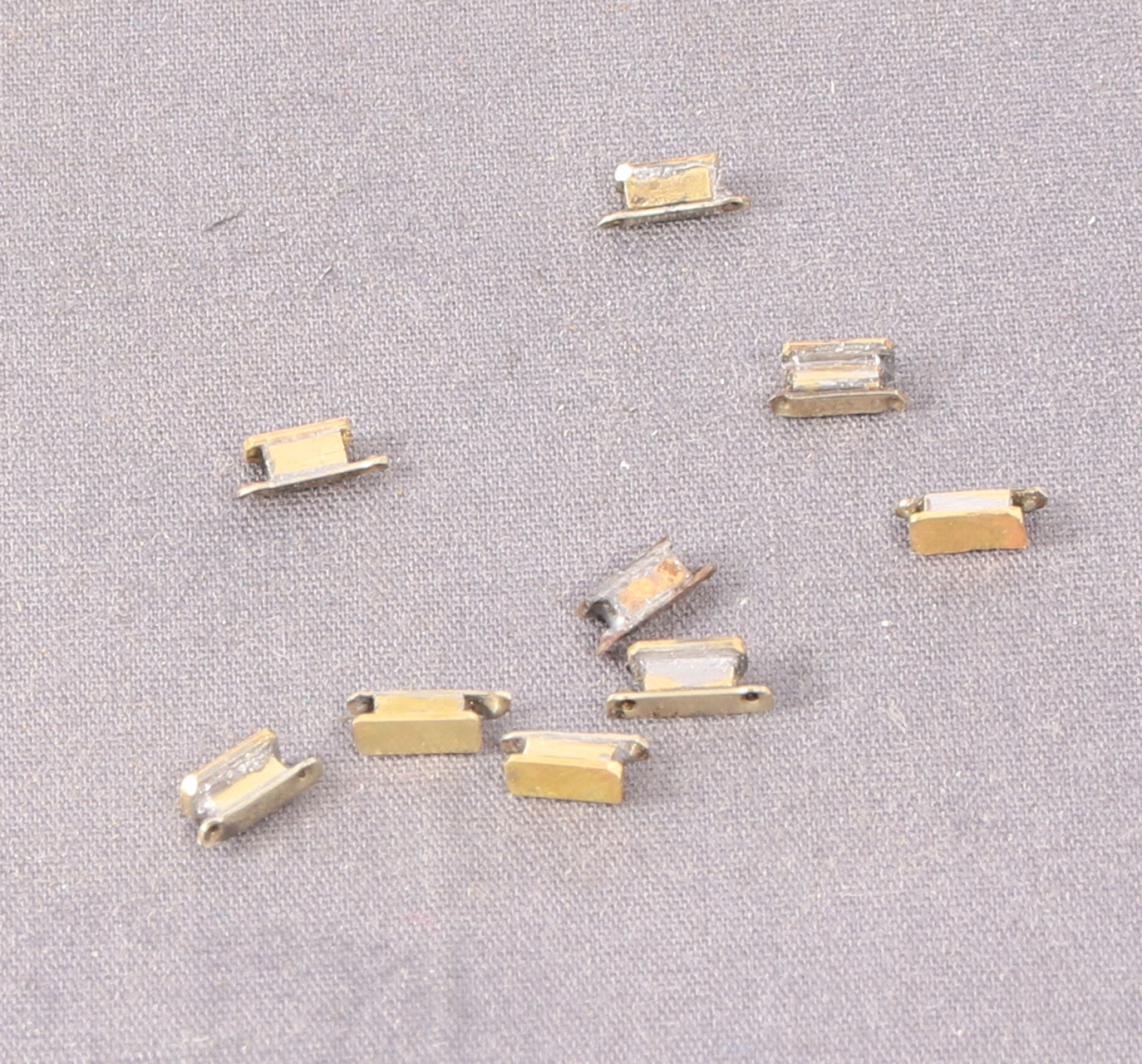
While still set up for making washout plugs and having looked through a few of my other kits to see if I need any more at some point (which I do). I decided to see how many I could make in 45 minutes.
I was pleased and a little surprised that I managed to make a dozen. Now compared to commercial CNC machined offerings that would be quite pitiful.
However when you consider that you have to turn the spigot on each end of the bar, then transfer it to the spin indexer to mill the square section. Then back to the lathe for parting off and turning the next spigot.
When using a collet block the work has to be backed out quite a long way to clear the cutter and the machine switched off to remove risk of injury while indexing the collet block. My collet blocks (ER25) are quite nose heavy due to the big collet nut on the end. This makes it essential to make sure that you have it pressed flat in the vice before tightening it. If you relax that pressure for the slightest instant before the vice grips it will tilt forward and throw the job out of kilter.
With the spin indexer you can literally move the cutter a couple of mm away from the work piece and unscrew the lock, then remove the indexing pin before rotating to the next index position, with your hands well clear of the cutter. Which means that not only do you not have to make many turns of the hand wheel to clear the workpiece, but you can also leave the machine running during reindexing and that saves so much time.
I was asked very tongue in cheek whether all the washout plugs that I made would fit on my 5p piece. I’m sad enough to try them and the answer is “yes they do”!
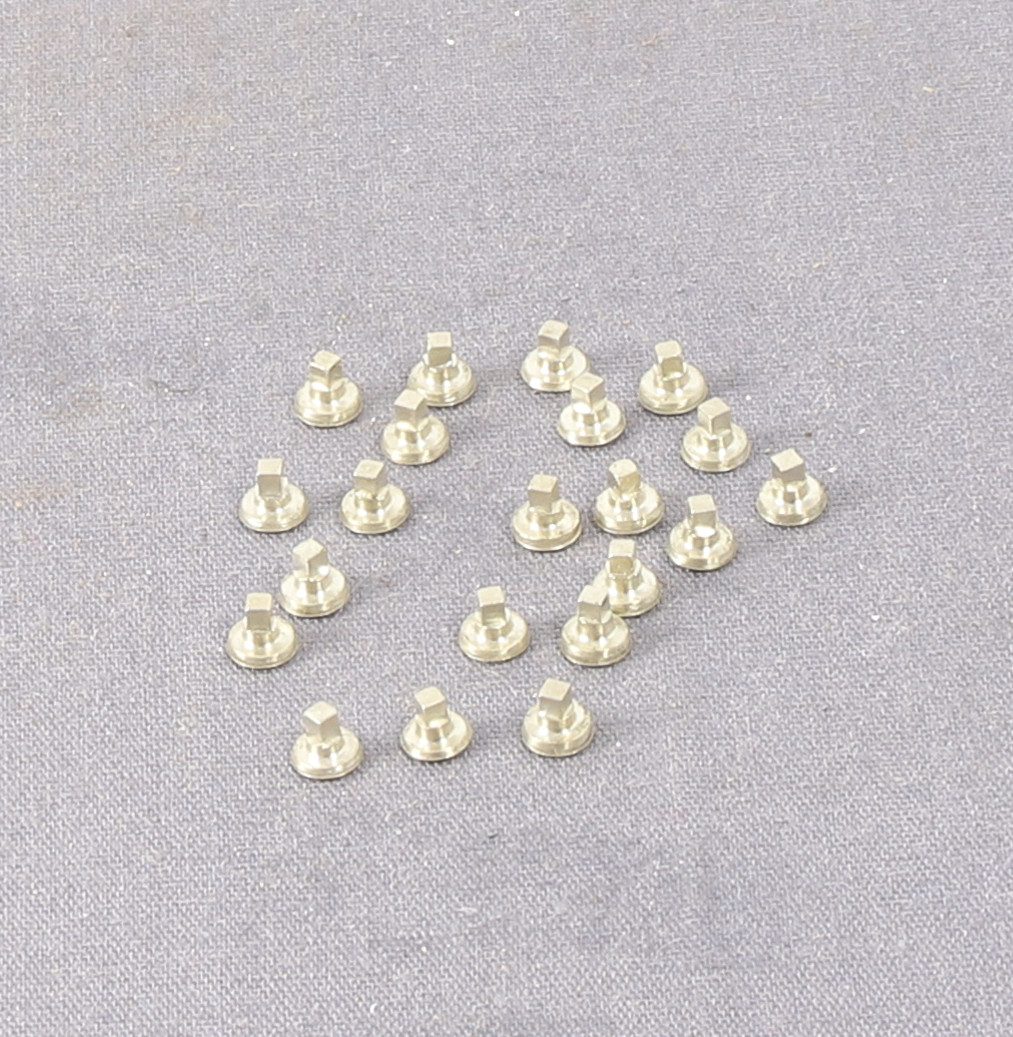
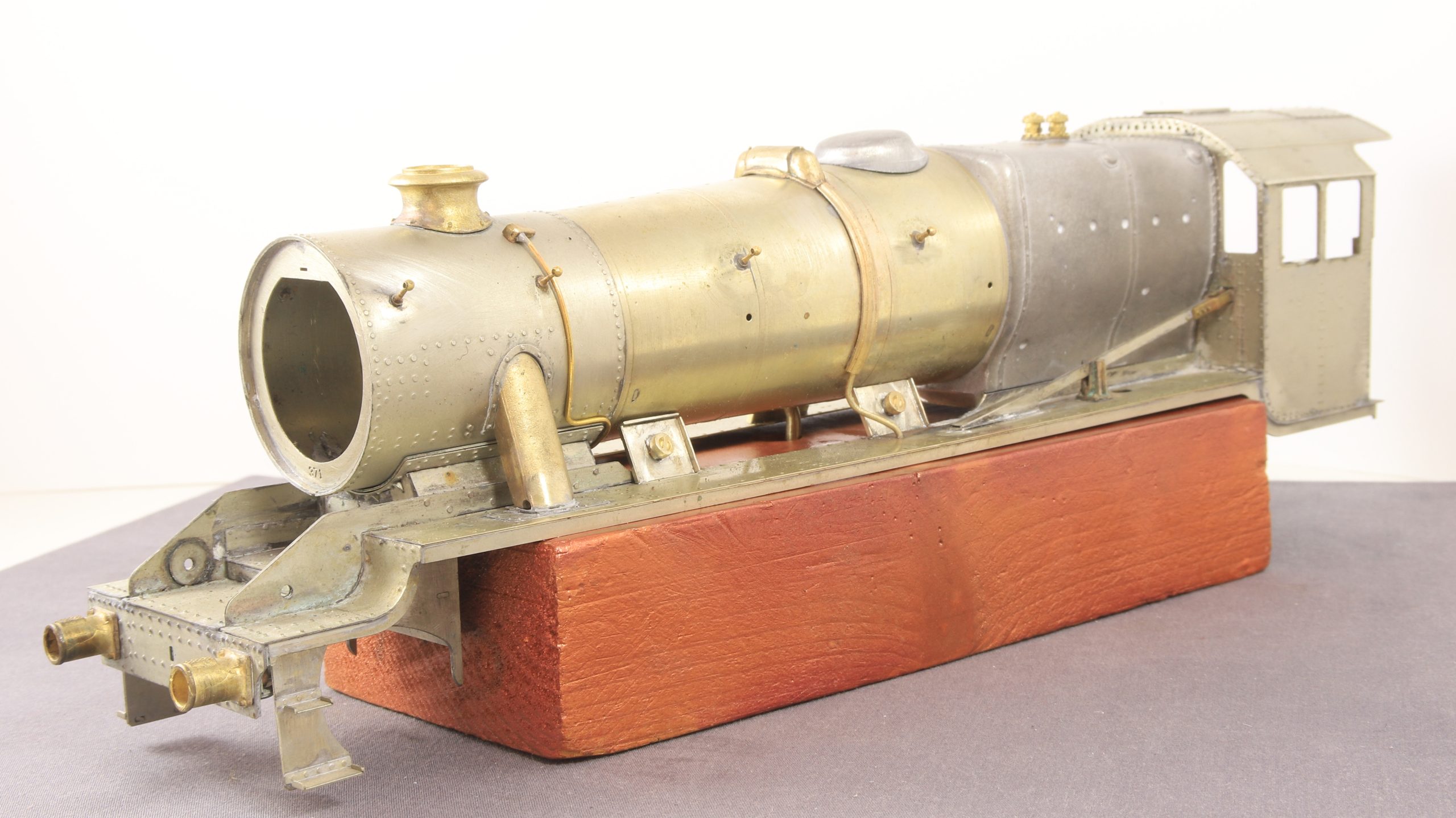
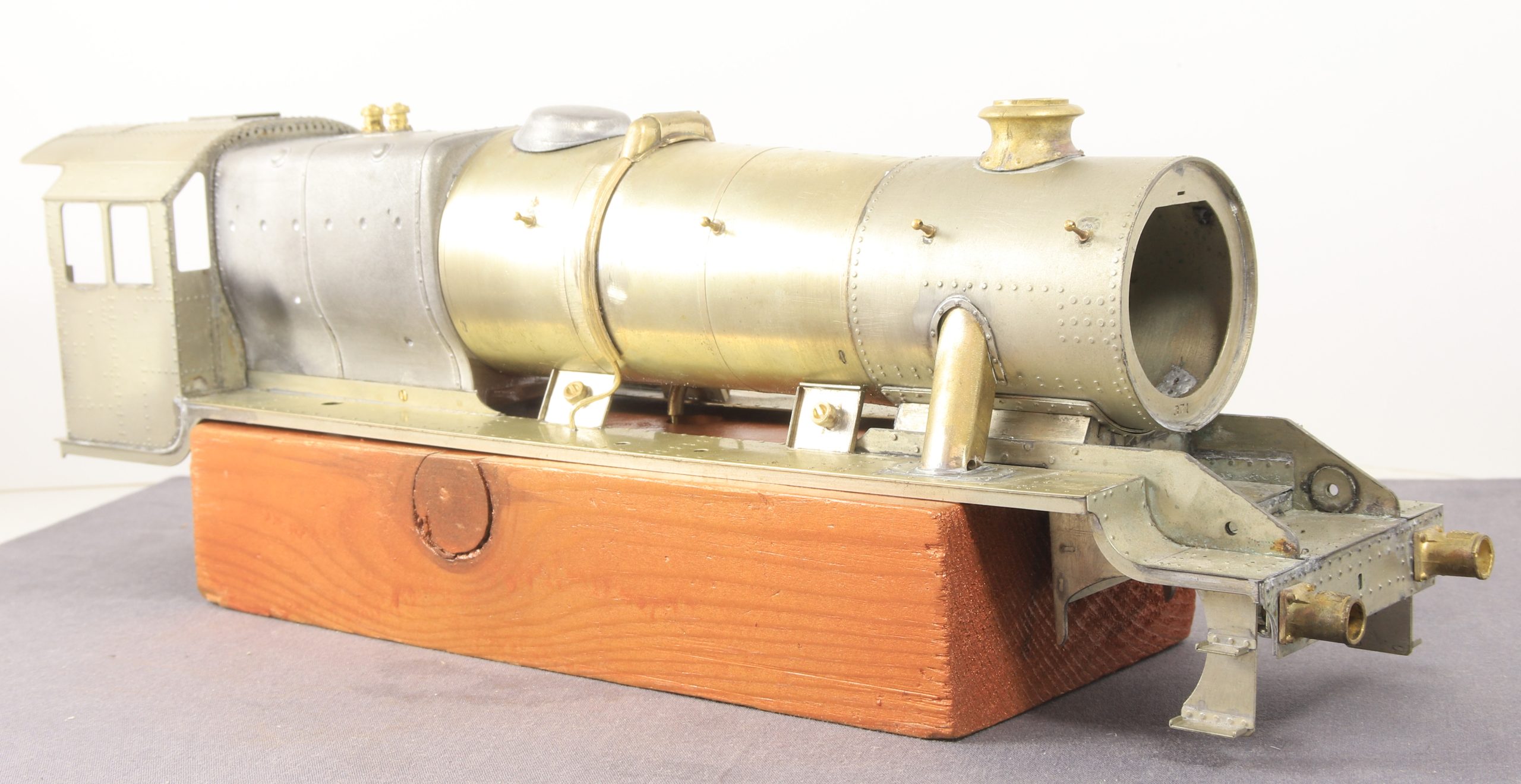
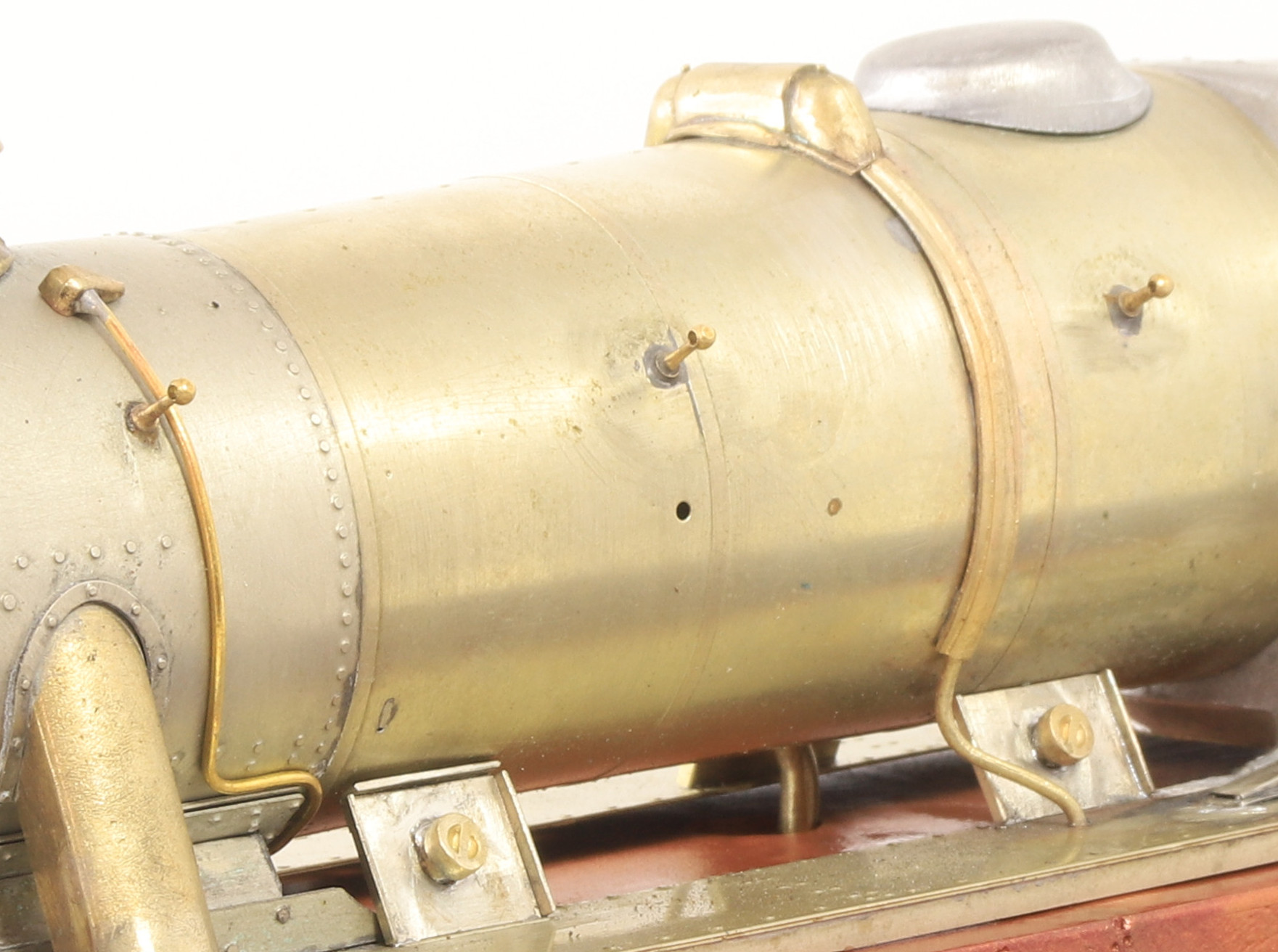
Ian Allen, fellow Guild member and font of knowledge for all things LMS kindly pointed out that the cladding band on the firebox only had the bottom four or five fixings, so the rest need filing off the firebox casting. He posted a photo showing his example and wile looking at it it reminded me that I still needed to do something with the washout plugs. I knew that I needed to do them but seemed to keep overlooking them as I progressed with detailing. So yesterday I got stuck in and made some.
My initial attempts were with a collet block but they came out asymmetrical and I couldn’t understand why so I fitted the spin indexer to the mill and tried again. it was at the point that I realised that my bit of brass rod was bent – this particular piece of rod has caught me out before…
I checked stock and found a piece of similar sized (3mm) nickel rod and tried again. All was well so I got stuck in and set up a mini production run and a couple of hours later I had enough for this loco plus a few spares.
They are designed to be soldered in from the inside. So the next job is to drill out all the holes and fit them before starting to fit all the oilboxes.
Studying photos shows that there are quite a number of 2 port oil boxes dotted about the footplate and visible inside the upper frames. There were some castings provided but there were only four of them and they lack mounting plates. While I could and did make mounting plates I also elected to remake the oil boxes with a bit more detail.
Besides to large 6/8 port lubricators mounton the the right hand side there seem to be three different types of 2 port lubricators so i have replicated each type as best I can.
The types that I have identified (so far) are:
Rear mounted with pipes coming out of the bottom.
2 Port Lubricator Boxes
Bottom Mounted presumably with the pipes also coming out of the bottom, but I haven’t modelled them.
The last type are those mounted at the front of the frames just under the end of the smokebox. These are very shallow and have a couple of prominent mounting nuts on top of the angle iron mounting plate.
What can’t really be seen in the photos is that back edge of the angle plate also has two holes and after struggling to workout how I might hold all the other parts together while I added the last two mounting bolts (the brass angle doesn’t take pressed rivets very well due to the proximity of the other leg) I elected to use the holes to drill the frames and then pass brass pins through to mount them.
After doing the initial rear mounted boxes with 180 degree solder it occurred to me, that I would make life much easier, if I soldered the others together using 296 degree solder. Thus making it less likely that they would fall apart if soldered to the frames with 145 degree solder. time will tell.
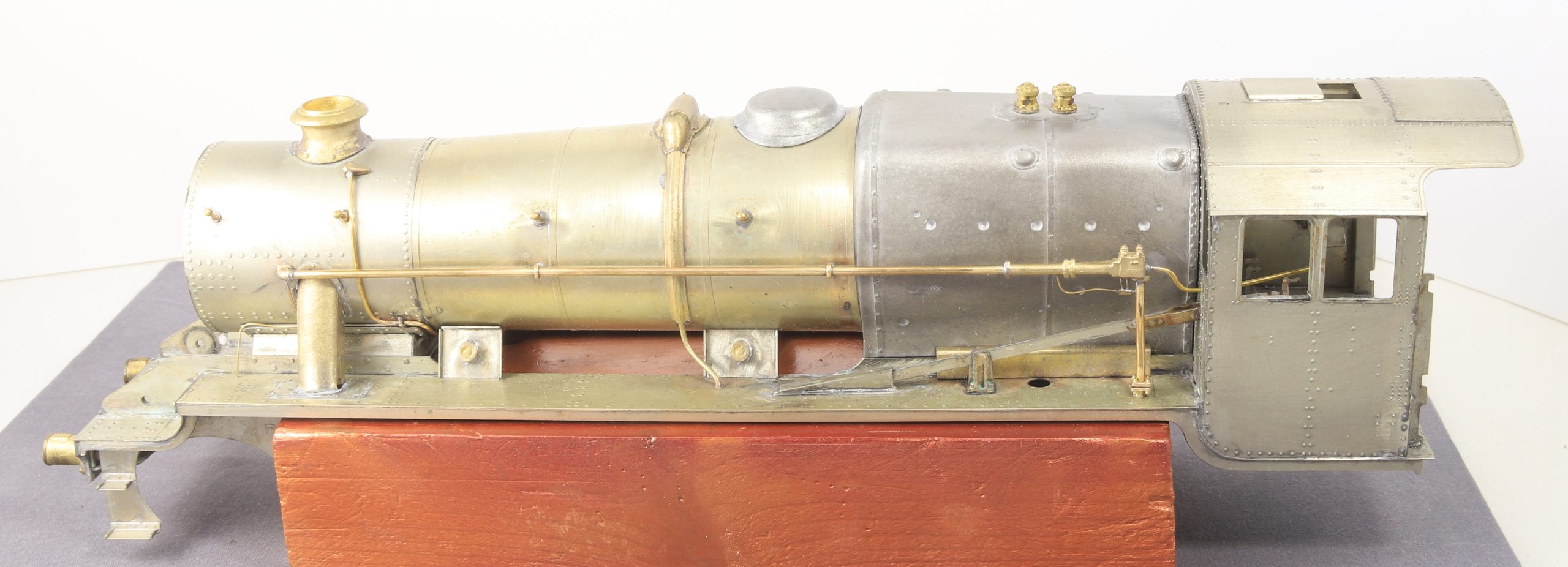
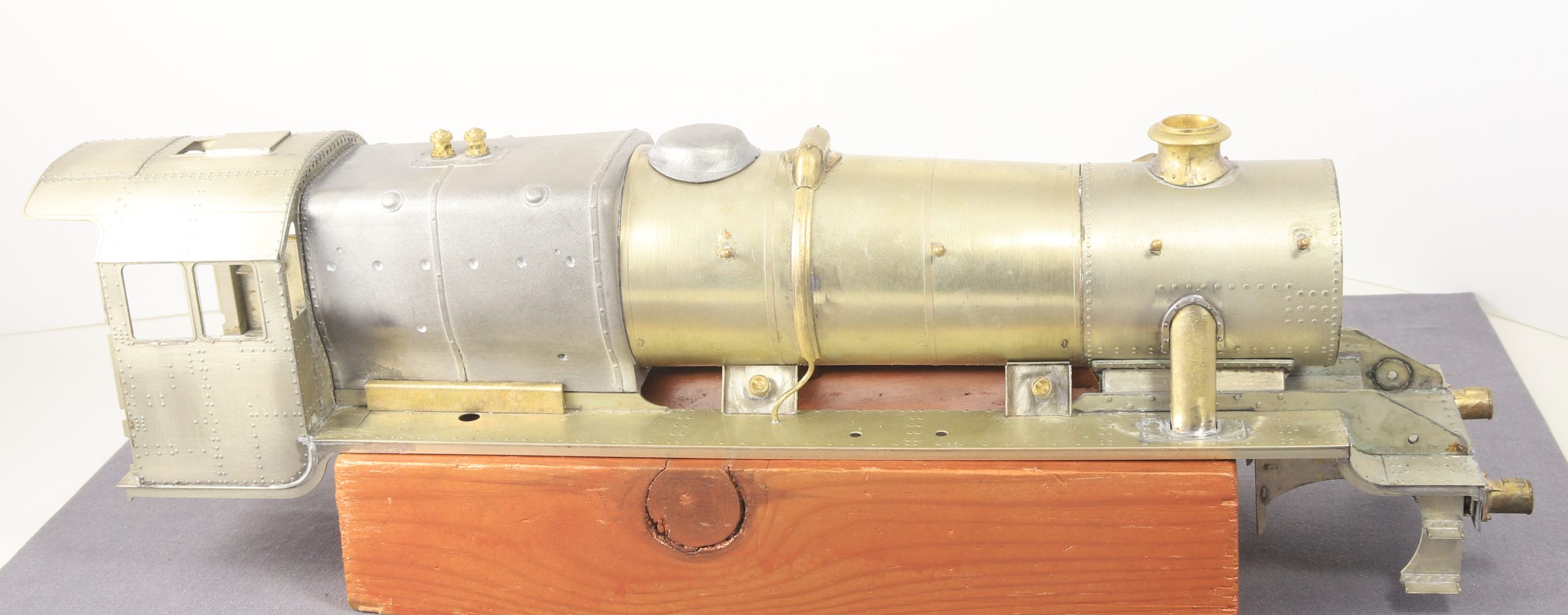
Still working away at adding details to the left hand side of the loco (although, I have added the solid blocks to the base of the firebox on either side).
After much fiddling to get the vacuum ejector pipe to sit horizontal I got there and it’s now fixed in place. As happens sometimes. I spent some time making the very visible pipe flanges that are fitted to the lower section of the vacuum pipe just above the footplate.
The best of these were soldered together in pairs and one pair fitted to the pipe. Then of course I discovered a pair of nice castings on a spru so my homemade ones are consigned to the spares box for now.
It was also kindly and discretely, pointed out that I had the dome on back to front. Which, was accompanied by a clear explanation of why it was thought to be so. As I read it, it made perfect sense and I could see clearly why it was on back to front. Life got in the way and I was unable to do anything in the workshop on Wednesday but I awoke early yesterday with my mind working on how I might safely remove the dome. I’d run elaborate scenarios of using the microflame while wrapping vulnerable bits in wet tissue ad using various items as heat sinks etc.
When I got into the workshop after breakfast I looked and realised that although I had fixed the boiler in place and removing it although not impossible would require undoing and refitting a number of parts. I could in fact get my low melt soldering iron into the base of the dome via the opening in the base of the firebox.
Then it was a relatively simple matter of starting to ease it off with my nails while heating the underside with the iron then once i had it move enough I used a pair of wooden coffee stirrers as pry bars to ease it off the rest of the way without damaging either the casting or the boiler. it was one of those situations where another couple of hands would have been helpful but I managed.
Oh what a few years of experience brings. Back when I started this build, if someone had told me then that I had the dome on the wrong way around. I would never have had the courage to remove and refit the dome and at that point the boiler was a separate entity.
As a small side note not long after the Finney7 team took over the range I bought a set of etched pipe clips (a side product from the Duchess kit) and this is the first time I’ve remembered to use them. Of course as soon as I touched the first one after thinking it was fixed in place, it pinged off, never to be seen again.
After a reply from a gent who knows much more about the real thing than I do, my life was made easier when he said that the smaller pipe didn’t actually feed into the down vacuum pipe put was clipped to the back of it. This saved another delicate 0.4mm drilling job.
It’s not exactly clipped but it’s out of sight behind the vacuum pipe when fitted so well hidden.
The observant amongst you will note, that the small pipe at the smokbox end was a casualty of my ministrations. So that will need reattaching.
Also, since the photos were taken I have shortened the union at the rear of the vacuum ejector which holds the pipe that goes into the cab. It’s now more ‘nut’ like… Plus I’ve cleaned up much of the excess solder even though it’s out of sight.
One of those jobs that I thought might take a bit of time and effort, actually went quite smoothly. Aside from a few minor adjustments and having to add a top piece to the two front backing plates because they were not included on the etch and there was quite a big gap above them which needed filling easily made from scrap etch, bent and then cut of with the guillotine.
Probably not the clearest in these photos but I also fitted the top feed pipes and the small casting and associated pipework to the smokebox.
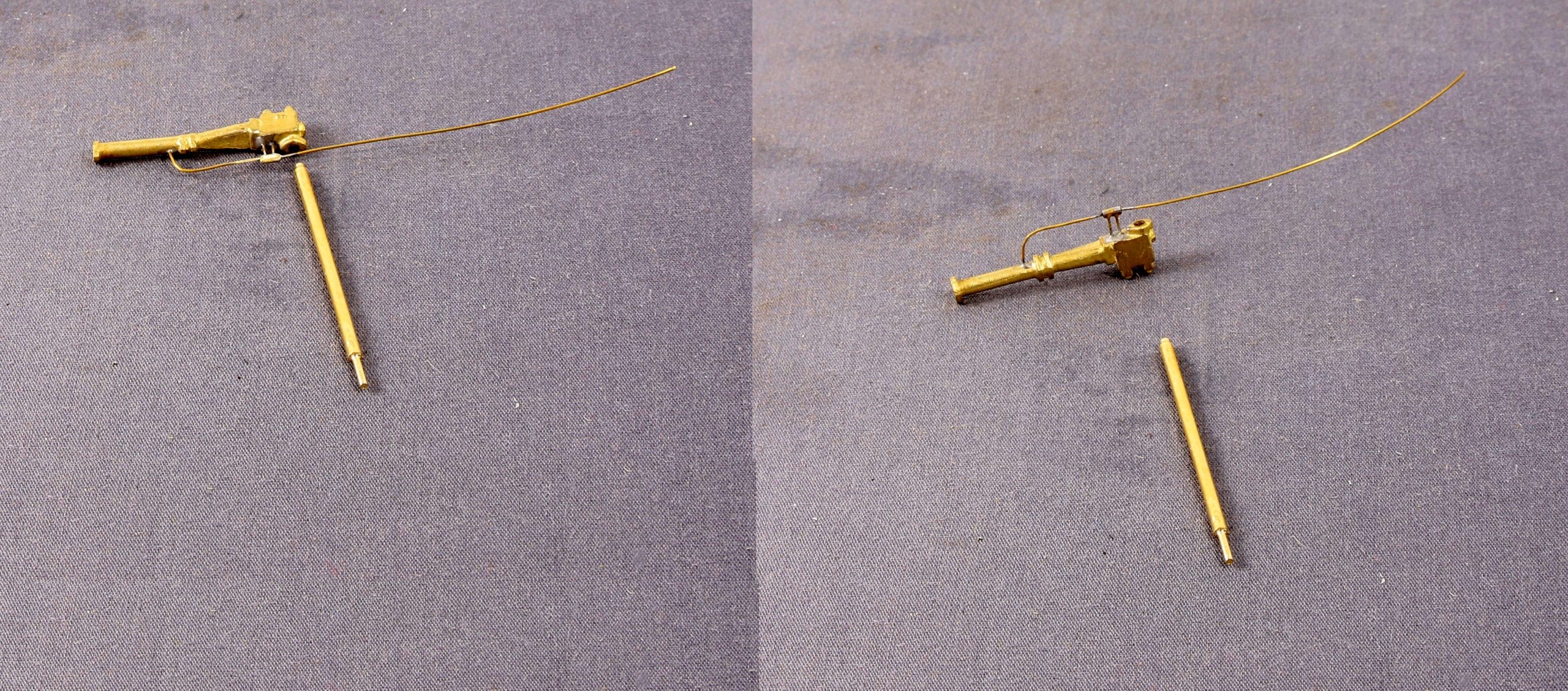
Having got the steam pipes in, I decided to work my way down one side at a time with the detailing. The vacuum ejector looked like it was going to be fun so yesterday I made start on that.
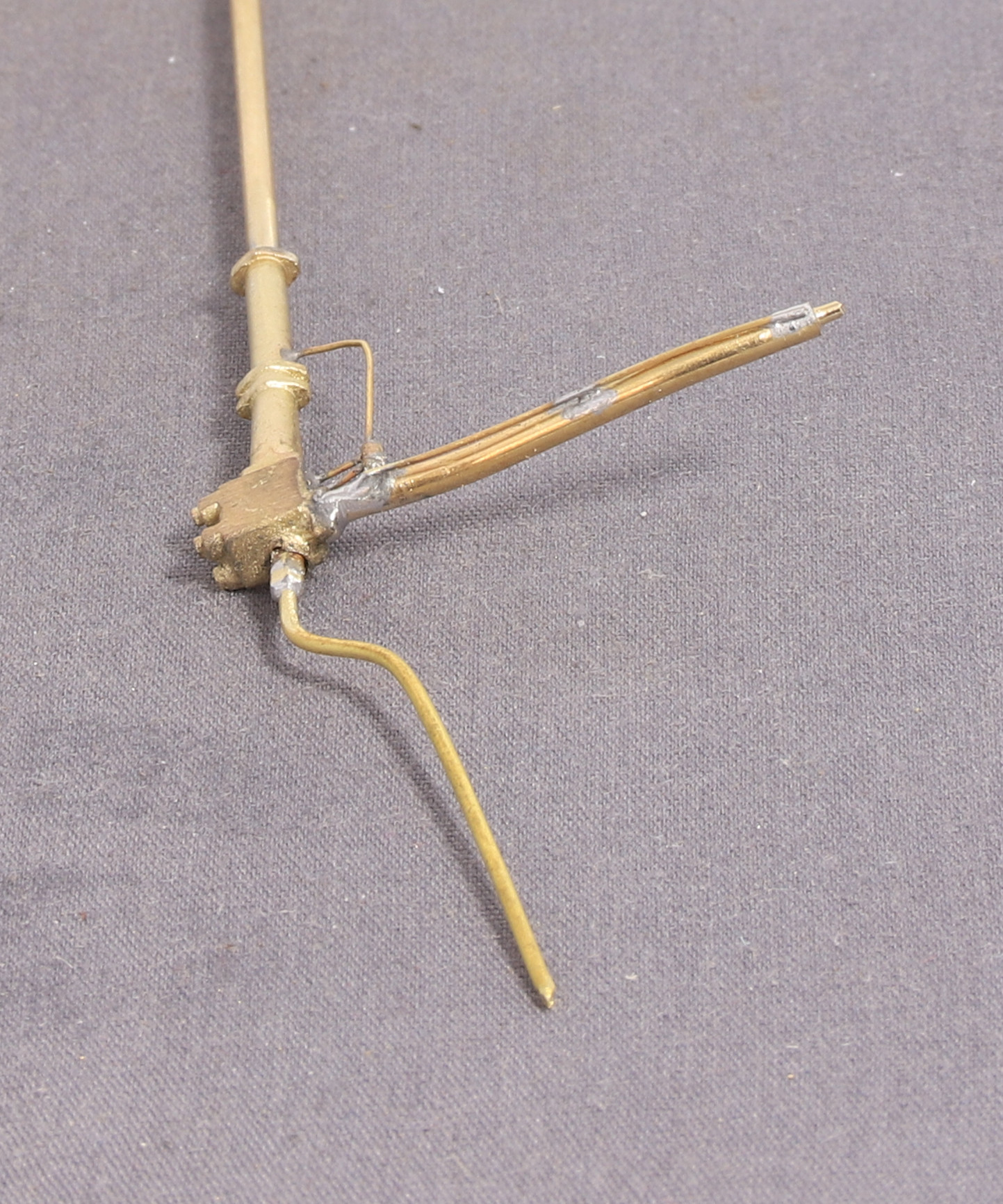
The elbow casting is provided in the kit but no provision is made for the small pipe and it’s connector nut that comes out of the bottom of the elbow. A 0.4mm hole was drilled and some 28 gauge brass beading wire soldered in. With a slice of tube filed to a hex to represent the nut.
Then came the pipe clamps. There isn’t any provision for this in the kit so I made some ‘split pins’ from 0.8mm half round brass wire and another slice of slightly thicker tube to create the flange.
Next is the ejector itself. The casting as you might expect comes devoid of pipework so more 0.4mm holes ensued pipes again made from 28 gauge beading wire and another length of microbore tube. This was cross drilled on one side to take the vertical pipes. I still need to drill the thicker down pipe to accept the horizontal pipe but first I need to make sure that it fits to the footplate and is bent in the right planes. There is also another pipe to fit to the rear of the ejector casting that goes into the cab.
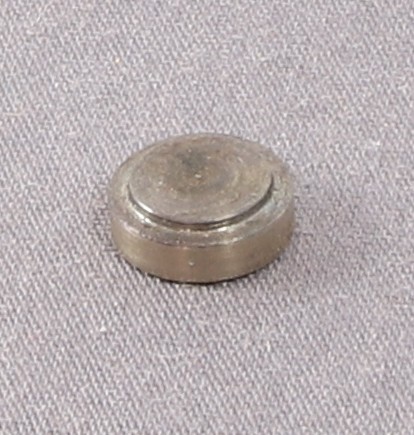
In my last post I forgot to mention that I was having a great deal of trouble getting the steam pipes to sit and stay in the correct position for soldering. In the end after a bit of careful measurement I turned a small steel button.
This was to fit on my wooden cradle, under the base of the steam pipes and just protruding past the first layer of etch to allow the steam pipes to sit as desired. It certainly made the job much easier.
Having had a short break from loco building while finishing and painting the Bolster wagons and putting together the 3D cranes. Yesterday I fitted the horn guides and front frame spacer to the N10 and today I fitted the steam pipes and worked out where the holes for the sand box fillers need to to be made in the filler backing plates for the 8F.
No photos of the N10 yet but I have some of the steam pipes on the 8F
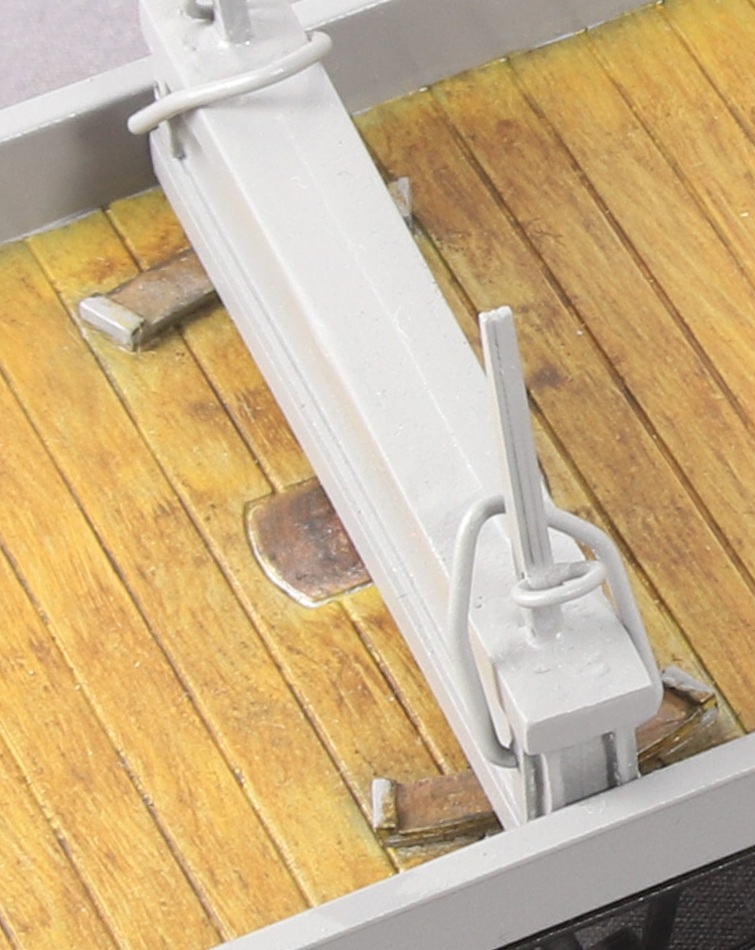
I took a close up of the ‘woodgrain’ and rust on of the bolster wagons in response to a comment received on another forum and I thought that I would share it.
It’s certainly the best result that I have ever achieved when painting brass or styrene to look like wood.
Before fitting them, I painted the jib(s) wood coloured again using a mixture of Vallejo Woodgrain and Burnt Umber this time over a red oxide primer which gave a very nice looking result. This is one application where small visible layer lines actually add rather than detract from the overall finish
So much so that people who have seen and handled the jib thought it was a piece of wood.
I still have to fit the yard Crane jib, but it’s painted up ready to fit.
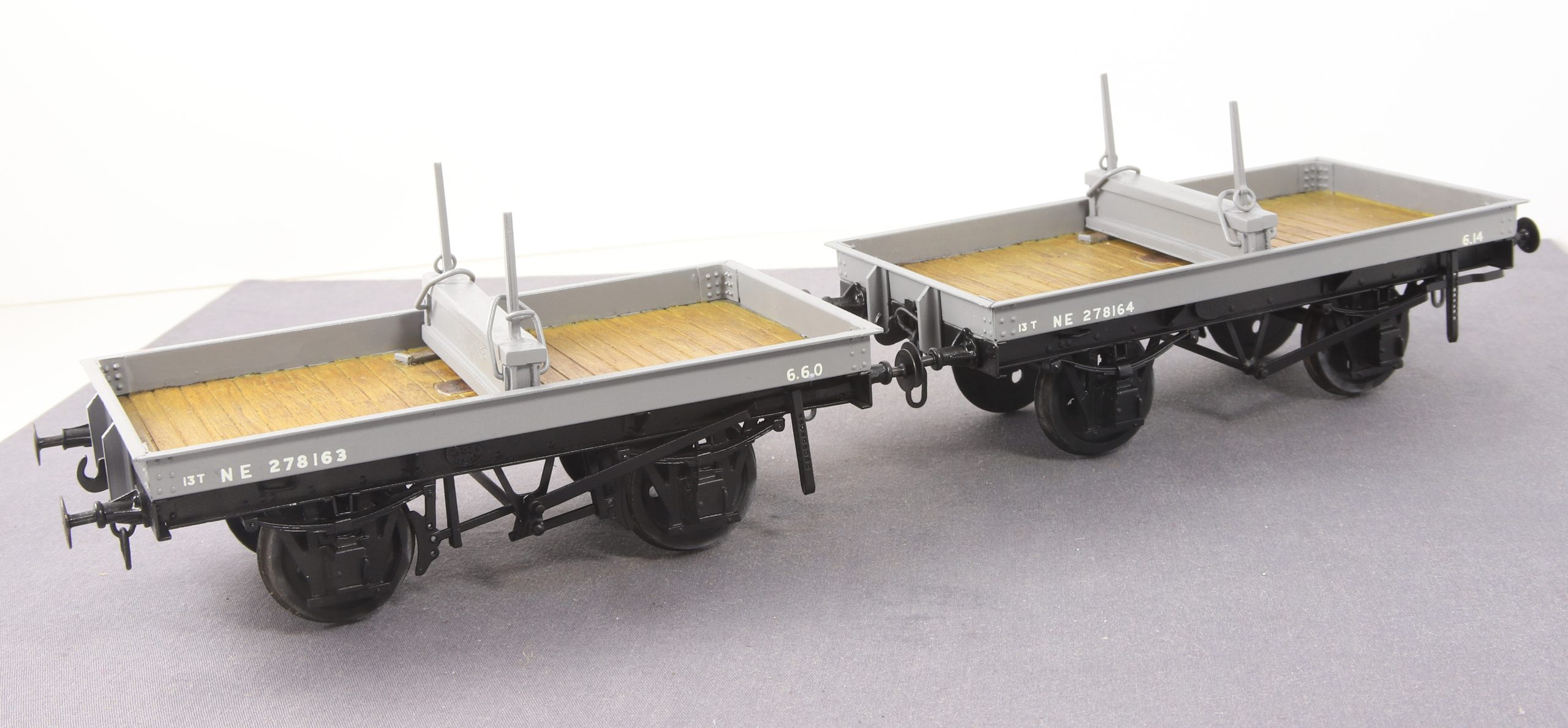
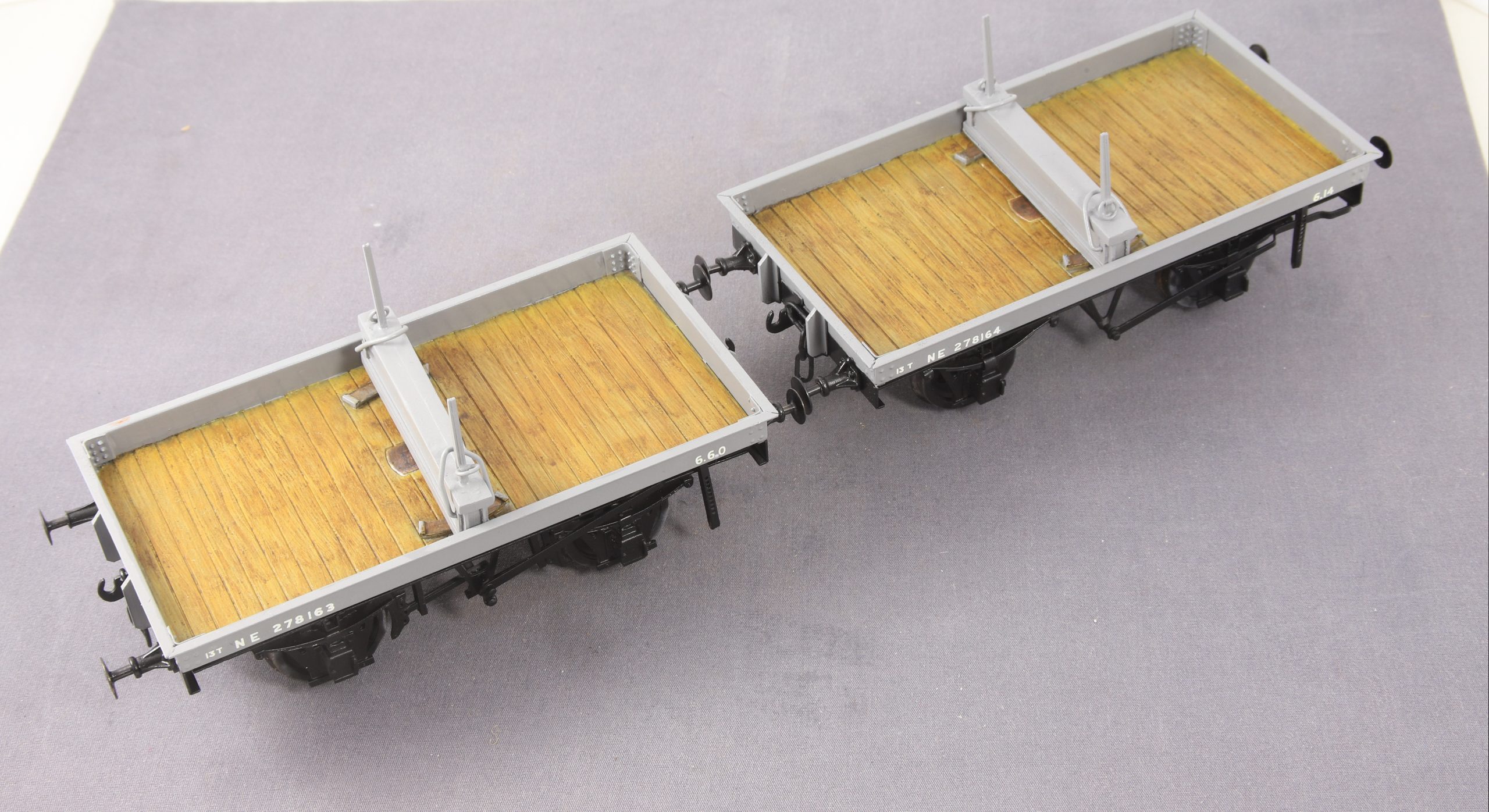
Late last week I managed to get the final bit of paint and the transfers fitted to the bolster wagons.
In my modelling time period these would have been relatively new so I didn’t want the wood finish to be too aged. It took about 6 layers of combinations of Vallejo: Wood Grain, Burnt Umber and Chainmail silver to get a finish I was happy with.
I also added a wash of rust and some graphite from a pencil lead onto the rubbing plates for the bolsters. At the minute I’m undecided as to what if any weathering to apply to the outside of the body and underframes. So I will delay fitting my load (a tree trunk aka a thickish twig from the garden)
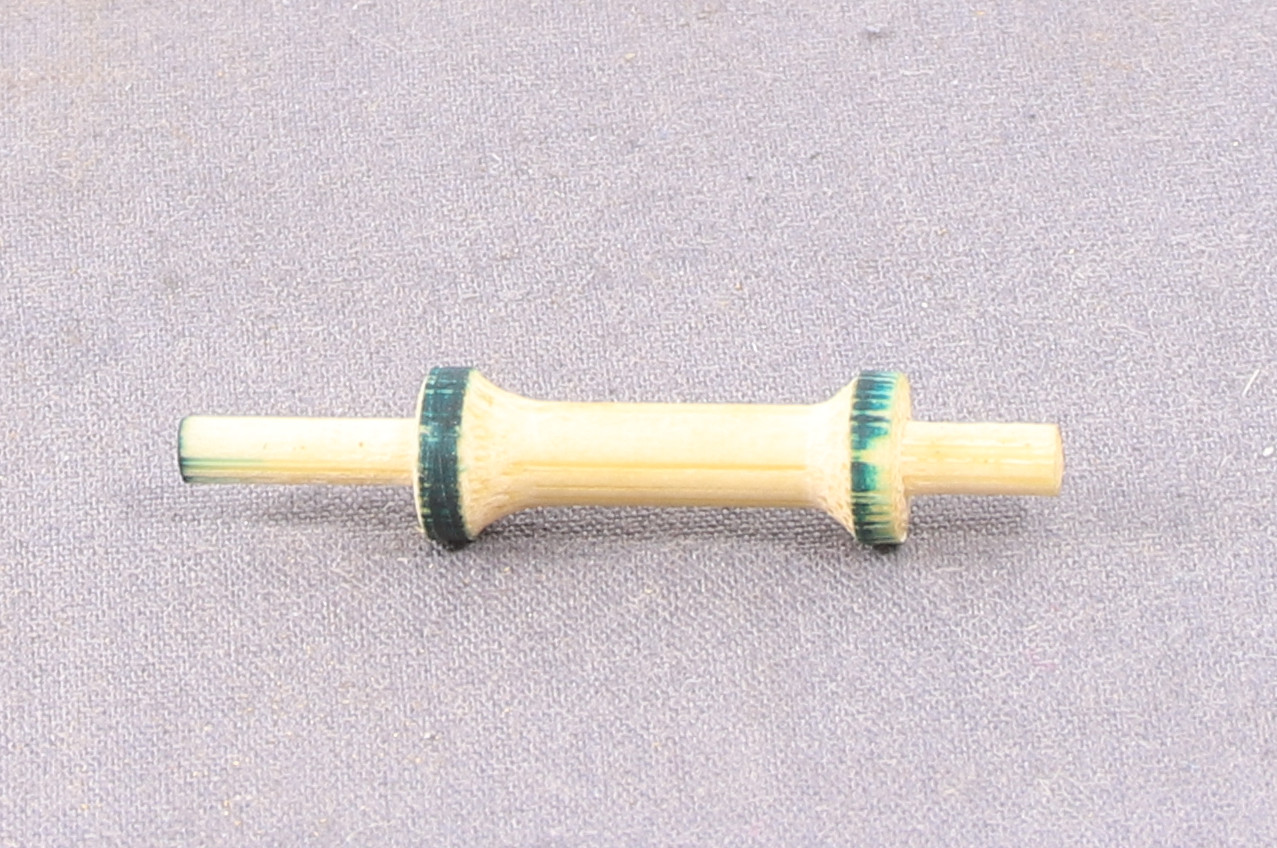
I thought that I had sent the stl files for the yard/floor mounted version of the crane to my friend for printing but I hadn’t so I duly sent them through. However I made a complete horlicks of the amount of rollers/spacers required so I had to turn the missing ones for myself.
The top one I turned from a wooden garden stake/plant support stick. The other two cream coloured ones were turned from old knitting needles.
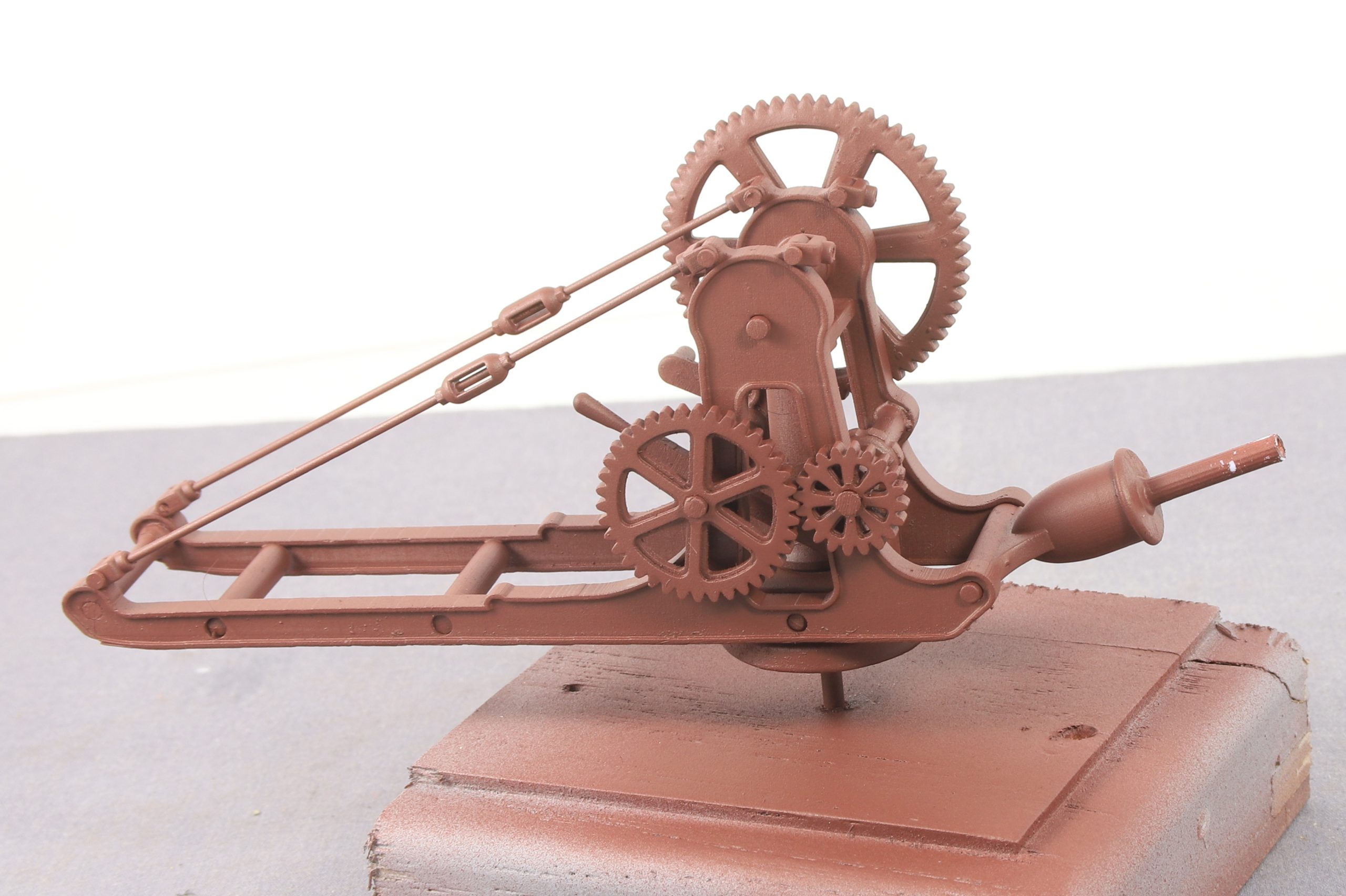
These are the same views after I had primed the crane with Vallejo German Red Brown Primer
Last year I designed mobile and static versions of a 5 Ton Hand Crane mainly to try out animation to see if I could make the gears work on a design. I hadn’t really thought too much about having it printed but a friend offered to print it for me if I created STL files.
He printed them recently and yesterday I made a start on assembling the Mobile Crane.This is where I got to having decided to prime when I got this far while I decided on how to depict the the jib. By that I mean raised as if to lift something or lowered as in travelling.. After some thought I realised that the 3D printed clevises wouldn’t support the stays without the slightest movement snapping them off so fully assembled it shall be.