Even More Jubilation, But It All Ends Here

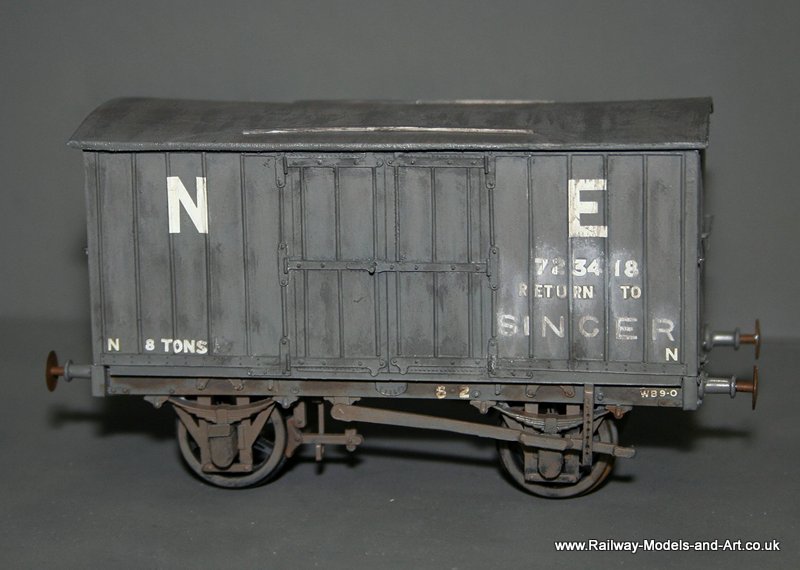
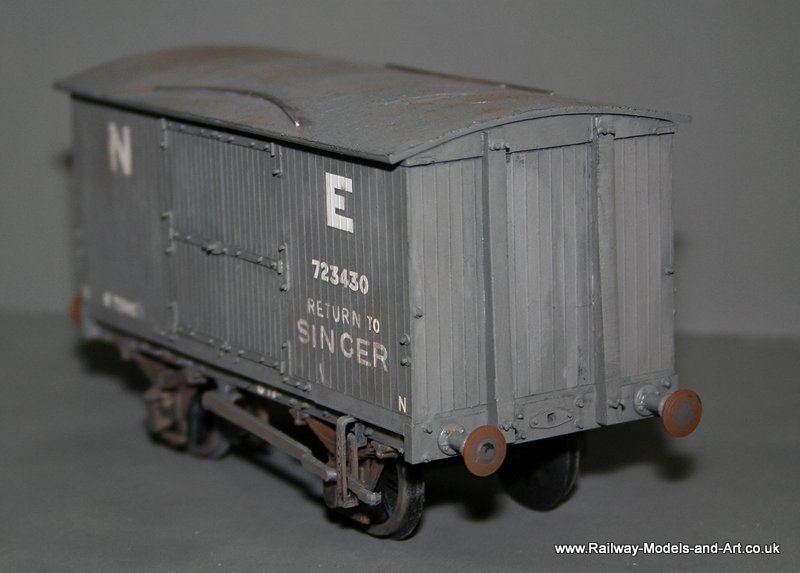
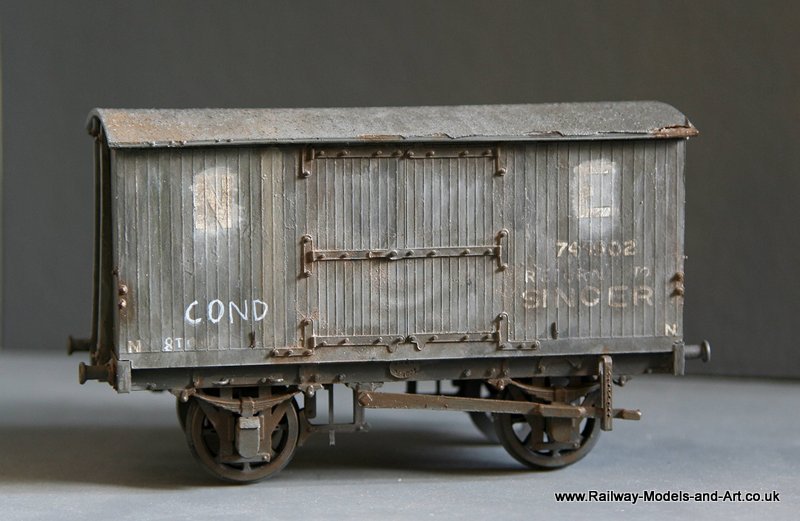
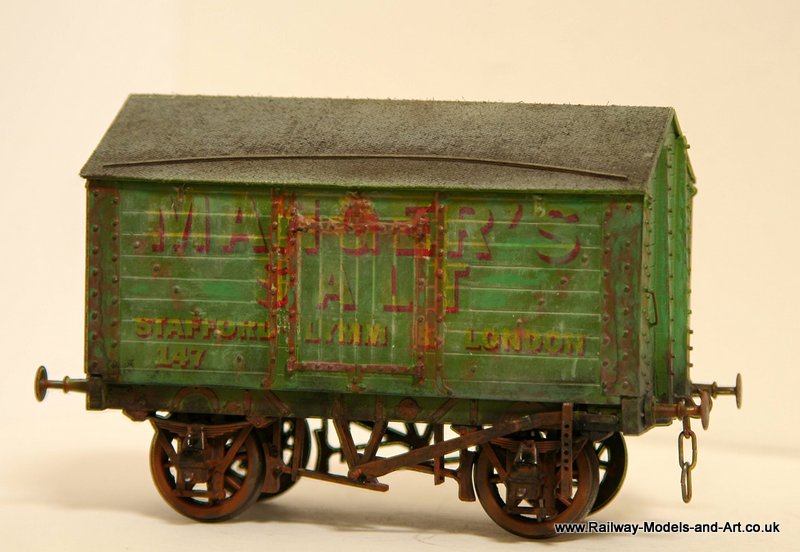
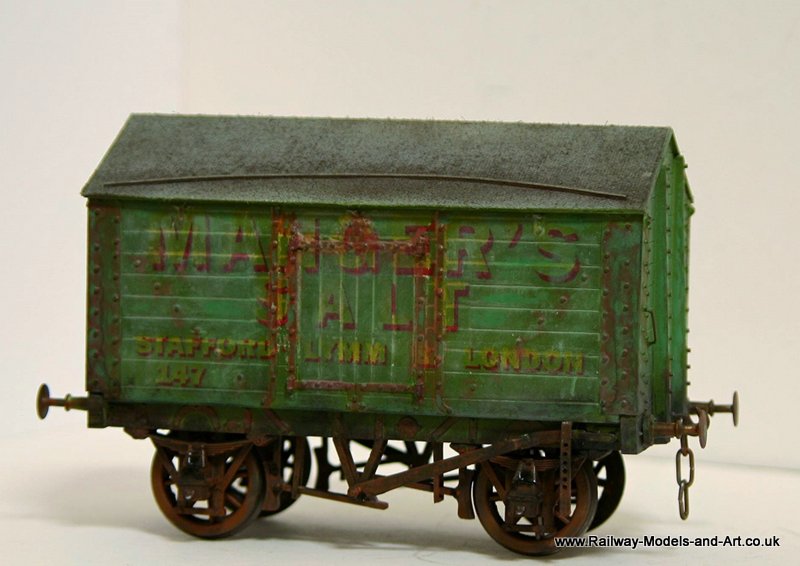
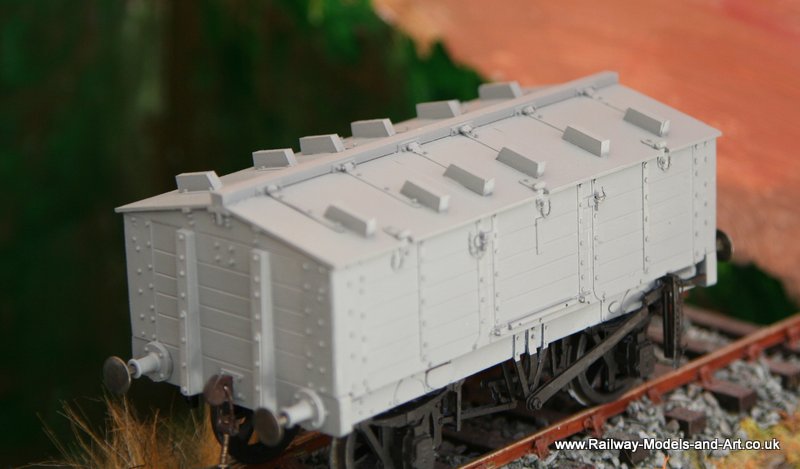
Last but not least, I did one of them in NBR livery.
I learned when reading Tatlow’s LNER wagon collection recently, that the NBR was the second largest of the constituents of the LNER (after the NER). This came as a bit of a surprise to me because I hadn’t realised just how big the NBR was. That’s probably one of the reasons that so many of the ex NBR wagons made it into the 1930’s still in faded NBR livery – there were so many of them.
Apart from the shabby paintwork, this one is in quite good condition for it’s age.
NBR-LNER 8 Ton Jubilee Vans - weathered

NBR-LNER 8 Ton Jubilee Vans – weathered

NBR-LNER 8 Ton Jubilee Vans - weathered

NBR-LNER 8 Ton Jubilee Vans – weathered

NBR-LNER 8 Ton Jubilee Vans - weathered

NBR-LNER 8 Ton Jubilee Vans – weatheren

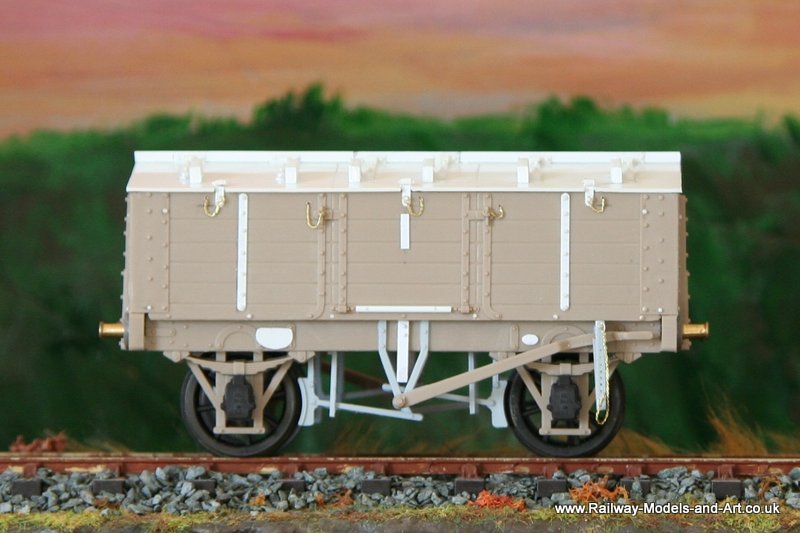
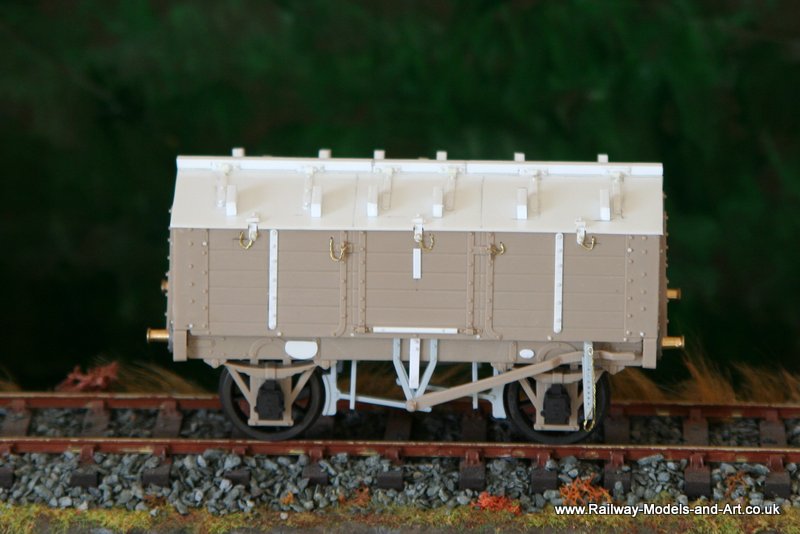
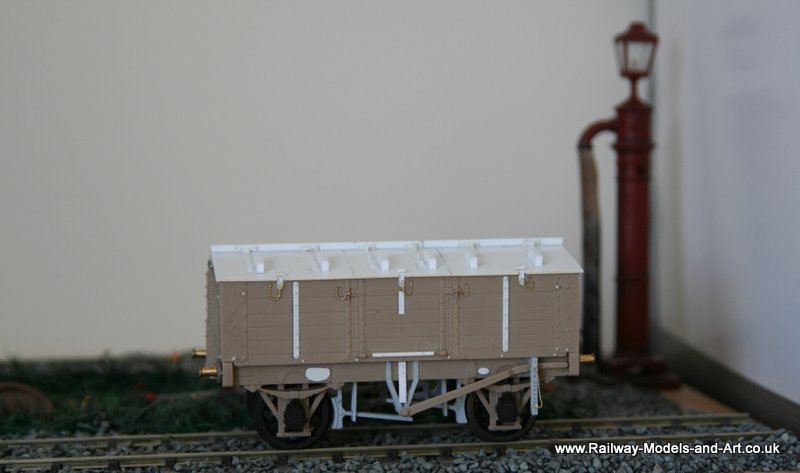
More Jubilee Celebrations.

Next up is the first of the earlier vans with wide-boards and beaded joints. This one also happens to be the one with a saggy roof – perhaps a sign of it’s age by this point.
NBR-LNER 8 Ton Jubilee Vans - weathered

NBR-LNER 8 Ton Jubilee Vans – weathered

NBR-LNER 8 Ton Jubilee Vans - weathered

NBR-LNER 8 Ton Jubilee Vans – weathered

NBR-LNER 8 Ton Jubilee Vans - weathered

NBR-LNER 8 Ton Jubilee Vans – weathered

NBR-LNER 8 Ton Jubilee Vans - weathered

NBR-LNER 8 Ton Jubilee Vans – weathered

NBR-LNER 8 Ton Jubilee Vans - weathered

NBR-LNER 8 Ton Jubilee Vans – weathered

I have really enjoyed the making and painting of these vans – probably why I have put so much time into them.

Celebrating the Jubilee

Alongside the Slaters tank wagon I also made progress on weathering the Jubilee vans.
First up the other matchboard version,  This one is lightly weathered to represent a recently painted example.
NBR-LNER 8 Ton Jubilee Vans - weathered

NBR-LNER 8 Ton Jubilee Vans – weathered

NBR-LNER 8 Ton Jubilee Vans - weathered

NBR-LNER 8 Ton Jubilee Vans – weathered

NBR-LNER 8 Ton Jubilee Vans - weathered

NBR-LNER 8 Ton Jubilee Vans – weathered

NBR-LNER 8 Ton Jubilee Vans - weathered

NBR-LNER 8 Ton Jubilee Vans – weathered

A GNSR passing fancy

Whilst browsing through volume 3 of LNER Wagons by Peter Tatlow working out what else I might model by altering existing artwork I came across a photo of what looked like an LNER liveried garden shed on the back of a GNSR dropside wagon. Interest piqued I made enquiries on various forums and the LNER forum came up trumps. My mystery ‘shed’ is a vacuum cleaner wagon which was converted by the GNSR in 1909 (the photo that I chanced upon was taken in 1953). As you might expect there wasn’t an accompanying drawing so I guestimated it at 10′ x 6′ x 6′ and drew up some parts in  Inkscape ready for cutting.

Last weekend saw the ‘shed’ assembled and the wagon itself well on it’s way  – no photos of the wagon yet because I left it in Bishop Auckland.

Modified by CombineZP

Modified by CombineZP

IMG_9902-001

Modified by CombineZP

Modified by CombineZP

IMG_9902

The roof canvas is my now usual used spectacle lens cleaning paper stuck down with thick pva.

Sadly the last shot shows that I have knocked a hinge off.

More Silhouette cutter experimentation

Most of my modelling time in the last week has been spent at the keyboard trying out various ideas for cutting. Over the weekend alongside painting the Jubilee van I also managed to get a few of the ideas assembled.

First is a side for an outside framed van – an NER G1

IMG_9866

Next (although I did the drawing and cutting about 3 weeks ago on this one) the ends for an LNER BY120 Pigeon van. This is as a prelude to producing more LNER coaches.

LNER Pigeon Van ends

LNER Pigeon Van ends


LNER Pigeon Van ends

LNER Pigeon Van ends

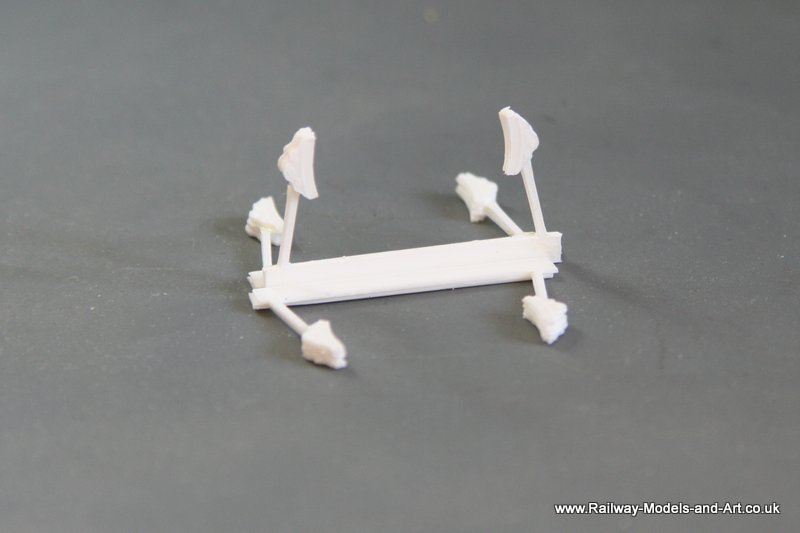
And lastly for now, the LNER went in a lot for fitted stock so I have been playing around with creating my own clasp brakes – these are 3’1″ but I have some 3’7″ drawn and cut I just need to separate them from the main sheet.

Clasp Brakes

Clasp Brakes

Clasp Brakes

Clasp Brakes

Louvres to you too – JLRT

One of the things that I have tried to do is to make as much use out of each drawing as I can. The NBR and the NER (I haven’t looked too closely at the other constituents of the LNER too closely yet). really help with this because of the many variations on a theme.

Using the example of the 8 ton Jubilee vans that I have just done I managed to use the artwork twice with minor amendments to make the matchboard version. looking a little further in vol 3 of Tatlow brought me to a 3rd and 4th variation this time in the guise of yeast vans same sized bodies, with both beaded and matchboard variations the only difference being is the added complication of louvres.

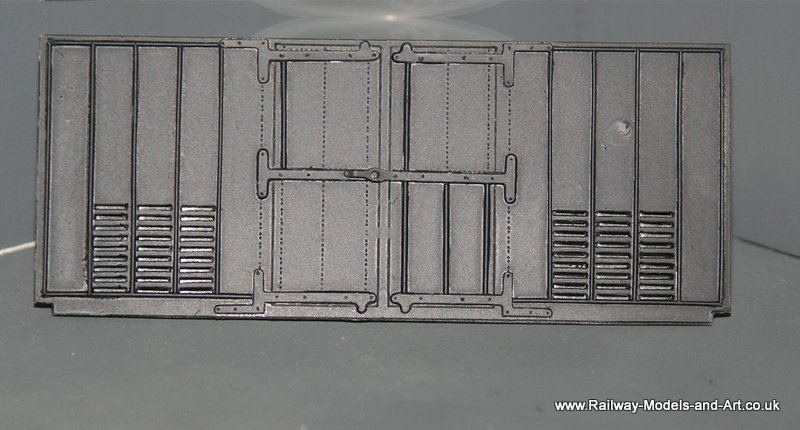
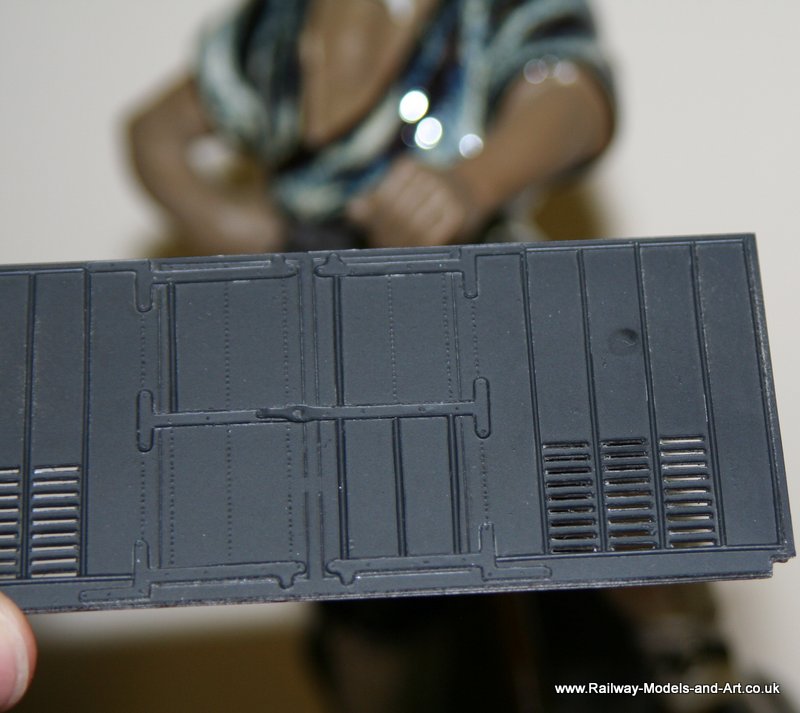
Since doing the louvres for the NER CCT I have studied and discarded a few methods of making louvres using combinations of styrene strip cut at angles etc. The flush sides of the louvres on the NBR vans gave me the opportunity to try another method which has far exceeded my expectations even if it is a bit time consuming to do.

This is where I have got to with the first van – or rather side of a van. Each side/end is made up of 3 layers and on the two inner layers I have moved the position of the louvre cut outs up by one pixel (I also marked each layer so that I knew which order to assemble them). To cut the slots I used an Exacto type chisel blade which was just marginally too wide for the length of the slot so I rubbed it on a diamond stone to reduce it a little.

To cut out the narrow end I used a suggestion from Graham (Beare) which was at the time for something else but applicable in this instance too. That suggestion was to use a piece of piano wire (0.8mm in this case) and file a chisel blade on one end I then gripped this in a pin vice and away I went – admittedly the patience only let me cut the slots in the 3 layers for one side at one session.

NBR Yeast Van

NBR Yeast Van

IMG_9812
Please excuse the odd second photo I took it this way to illustrate that when viewed from a low angle you can see through the louvres but from the more normal side on view you can – JLRT…….

It still needs some beading finishing off and the other side and the ends need their louvres cutting out

Parkside/Scratch built/Silhouette cut NBR D39B 10 Ton Van

My obsession with interest in all things ex NBR continues.

Last year I bought a selection of NBR underframe sprues from Parkside for scratch building wagons (this was before the Silhouette Cutter was even on the horizon. At the same time I also got a couple of ends from the 8 ton Jubilee van kit with a view to making one of the later Diagram 40B vans. Unfortunately when I compared the drawings the later vans whilst having the same style of ends were not only taller but wider too.

So the ends went in the spares box and were forgotten about. That is, until last weekend when I happened to be reading the chapter in Vol 3 of LNER wagons and realised that the first few vans that the NBR built to D39B were not only low roofed but the same width as the earlier Jubilee vans – Bingo!

The next problem was that although I have a few drawings they are all of the taller vans. Tatlow to the rescue. Although there isn’t a drawing, there is a pretty good square on side view photo, so I scanned and imported it into Inkscape. I resized it using the wheel base as the known dimension and essentially drew over the top of the photo.

I have in mind to do some outside framed vans starting with and NER G1 van and decided that the external framed door on this one would act as a proving ground for doing them in layers. Initially I drew the doors as 6 layers of 20thou – 2 backing, 1 plank detail and 3 for the framing. Once I had snapped them out and compared them to my existing Parkside 8 ton Jubilee vans I came to the conclusion that 6 layers was too thick. I left out one of the backing layers and one of the framing layers and then proceeded to assemble the doors.

On the other van ‘kits’ that I have done I have done sides and ends in 3 layers and have sized the inner 2 side layers shorter to allow the ends to fit inside the outer layer of the sides. I had to do it a little differently on this one because the Parkside ends are chamfered to a 45 degree angle. To get around it I made the 1st inner layer 0.5mm shorter than the outer side and the next one another 0.5mm shorter than that.  It was a great idea but fell down in practice because it was difficult to spread Butanone on the layer and then accurately place the next layer central with a 0.5mm gap at either end so the next ones that I do will have a removable registration tab on them.

I managed to get them together in the end and then using a broad diamond file (from the ladies manicure counter) I filed them to an angle that fitted against the ends. I took care to mark each side and end where they fitted together to make sure that they went back as I had filed them to fit.

In the end I was really pleased with how nicely they fit against the ends bearing in mind that I had drawn the parts from a scaled photo.

I had drawn the curved ended bottom runner and the plates that look a bit like birds feet in 20 thou to give them a bit more strength (I also cut some from 10 thou just in case). That left the runners themselves which are very much like pulleys. I hit upon the idea of putting a length of 2mm styrene rod in a pin vice and then using the blunt point of a round file to score/pick at it to make a groove around it that would sit on the runner. I then used a scalpel to cut of the runner by rotating the pin vice and I was quite impressed at how cleanly the “pulley” was cut off.  Since then I have thought of a refinement – grind a curved cutting edge on a piece of 0.8mm piano wire instead of the rather crude file point.

Next I assembled runners and the door stops etc. on one side and glued it to the ends/floor. At this point I thought I was onto a winner when the spares box also revealed a pair of spare Parkside sole bars but sadly they were too long and although I could have cut them down the wheel base was wrong too.

Enough of the talk on to the pictures.

NBR D39B 10 ton van

NBR D39B 10 ton van
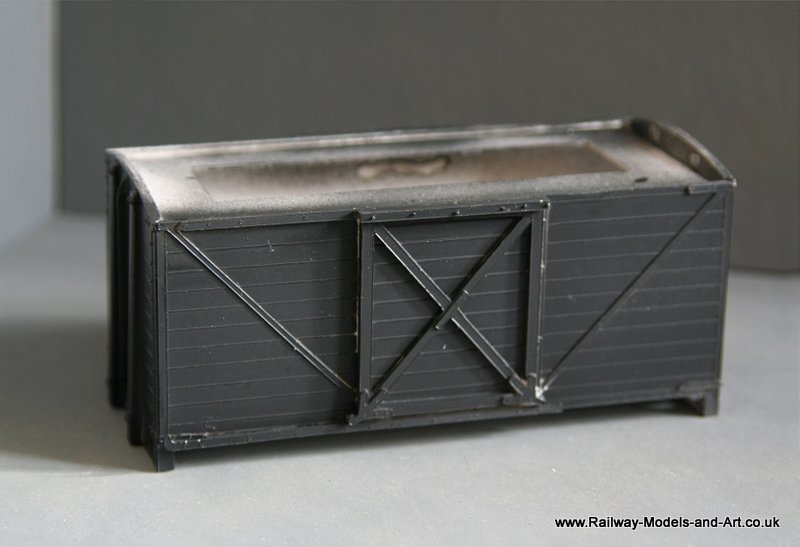
NBR D39B 10 ton van
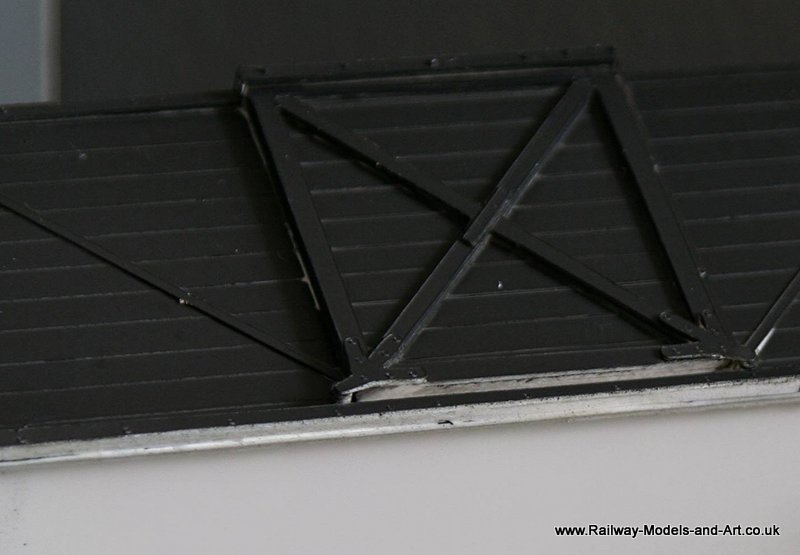
NBR D39B 10 ton van

NBR D39B 10 ton van

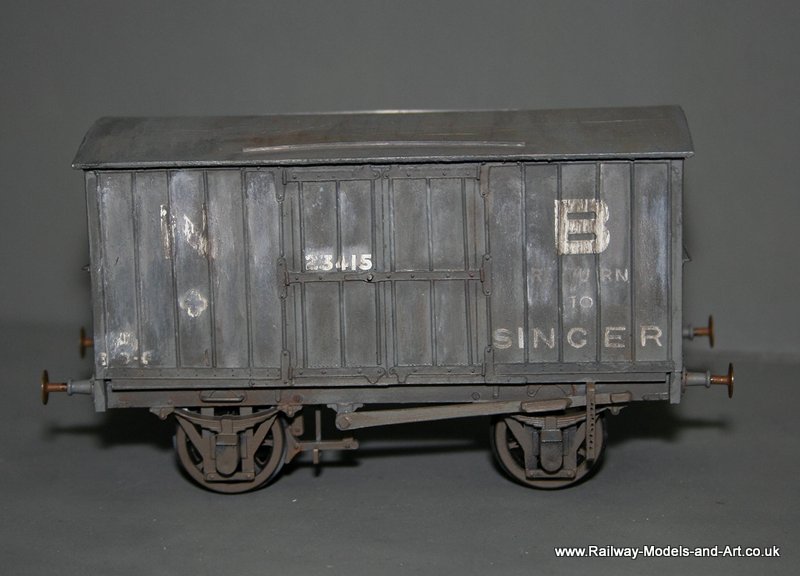
NBR D39B 10 ton van

NBR D39B 10 ton van

NBR D39B 10 ton van

NBR D39B 10 ton van

NBR D39B 10 ton van

Getting ever nearer to the finish line

Around meeting up with the guys at Shildon on Sunday I have managed to make good progress with getting the transfers on the Jubilee vans.
Scratch Built ex NBR Jubilee Vans

Scratch Built ex NBR Jubilee Vans

Scratch Built ex NBR Jubilee Vans

Scratch Built ex NBR Jubilee Vans

Scratch Built ex NBR Jubilee Vans

Scratch Built ex NBR Jubilee Vans

Scratch Built ex NBR Jubilee Vans

Scratch Built ex NBR Jubilee Vans

Three down and one to go. I do still need to add running numbers to them all – that’s what looks like  a water mark on the van sides is – the glossy bit that awaits the number.
Even now while looking at photos I keep seeing more details to add.
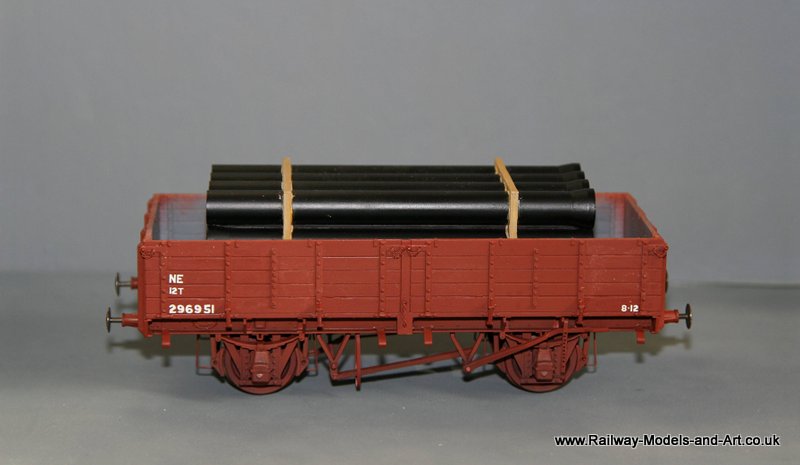
Lastly I also got some transfers on the pipe wagon too.
Parkside 12 ton pipe Wagon

Parkside 12 ton pipe Wagon

Parkside 12 ton pipe Wagon

Parkside 12 ton pipe Wagon

I still have some way to go with painting and weathering them all but they are coming on.

Jubilee’s ready for decorating…..

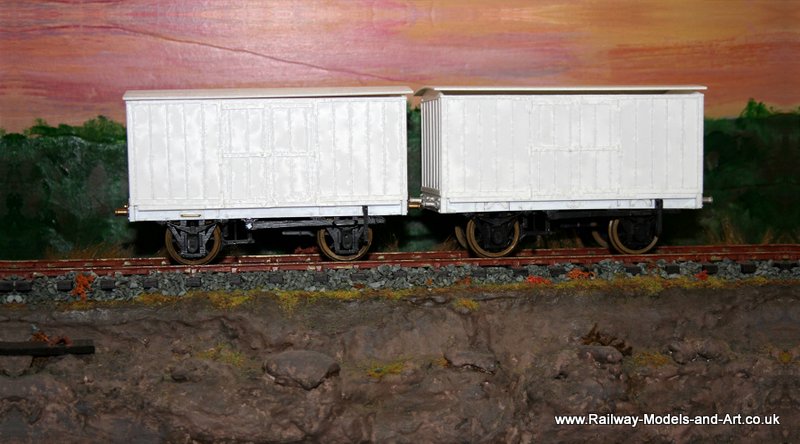
Aside from adding some lead to the two matchboard vans and gluing the roofs on the Jubilee vans are finished and ready for the paint shop.
Scratch Built NBR 8 Ton Jubilee Vans

Scratch Built NBR 8 Ton Jubilee Vans

Scratch Built NBR 8 Ton Jubilee Vans

Scratch Built NBR 8 Ton Jubilee Vans

Scratch Built NBR 8 Ton Jubilee Vans

Scratch Built NBR 8 Ton Jubilee Vans

Scratch Built NBR 8 Ton Jubilee Vans

Scratch Built NBR 8 Ton Jubilee Vans

Next is the challenge of producing the “Return to Singer” transfers which I also have a plan to do them on the Silhouette.

More ‘Jubil’ation……

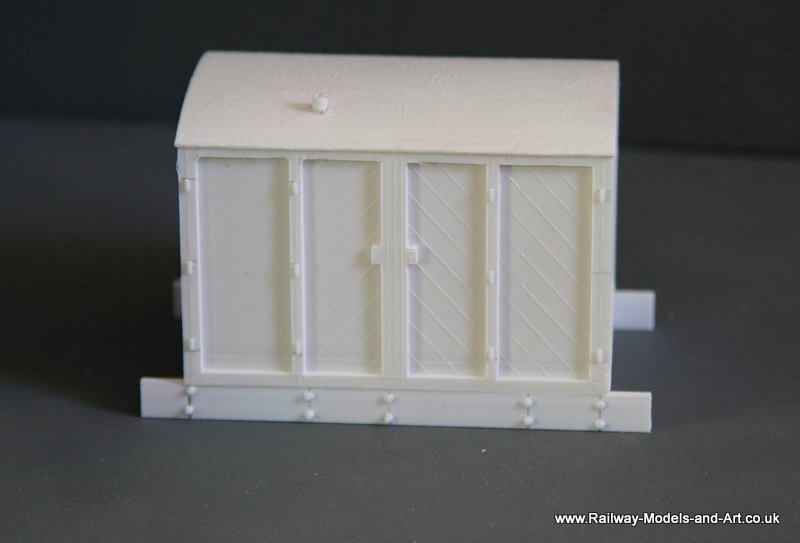
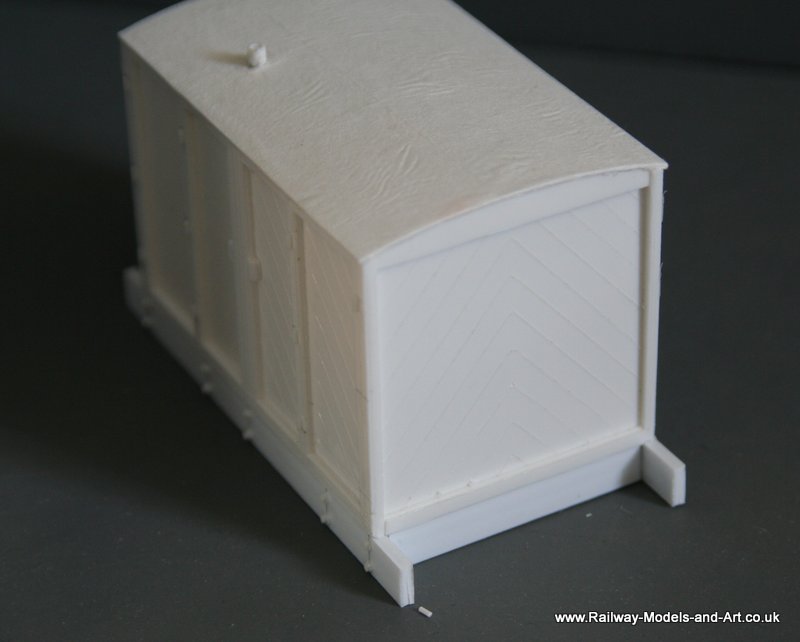
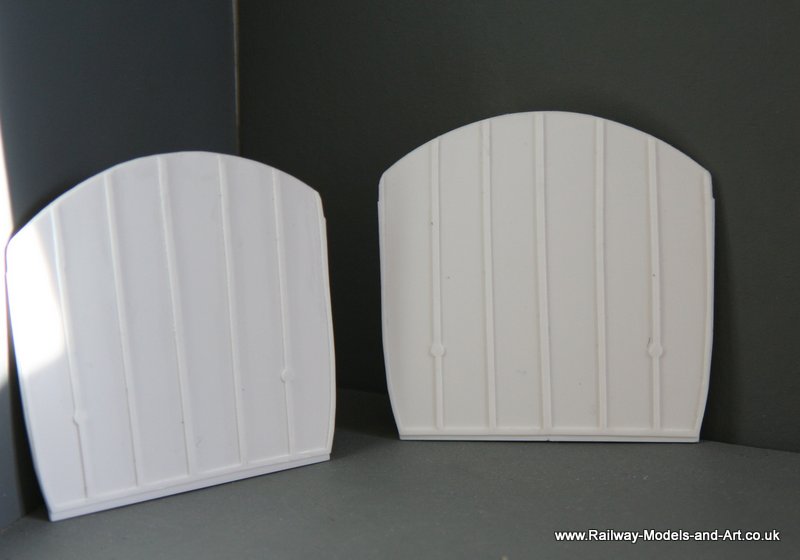
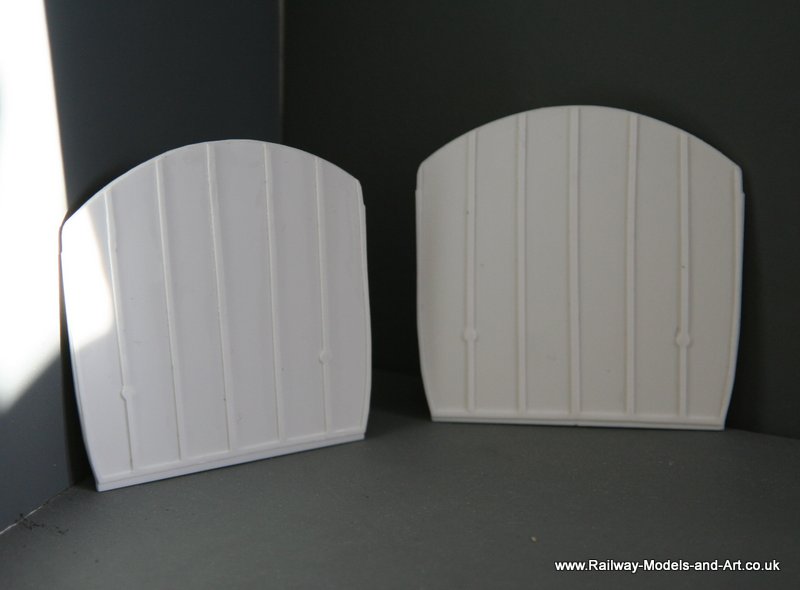
While up north last week I managed the best part of four days and evenings at the bench which saw much progress on the Jubilee vans. So much so that I thought that I had the panelled pair complete apart from adding weight and sticking the roof’s down. Hmmm, another look at the photos showed the lack of handrails across the ends…… The pair of matchboard versions are well on their way too but one still needs the end posts cutting and adding along with yet more bolt heads that I missed on the first pass.
Despite using the cutter and Parkside underframe details I reckon that each van will have more than 20 hours of assembly by the time they are all ready for the paint shop.
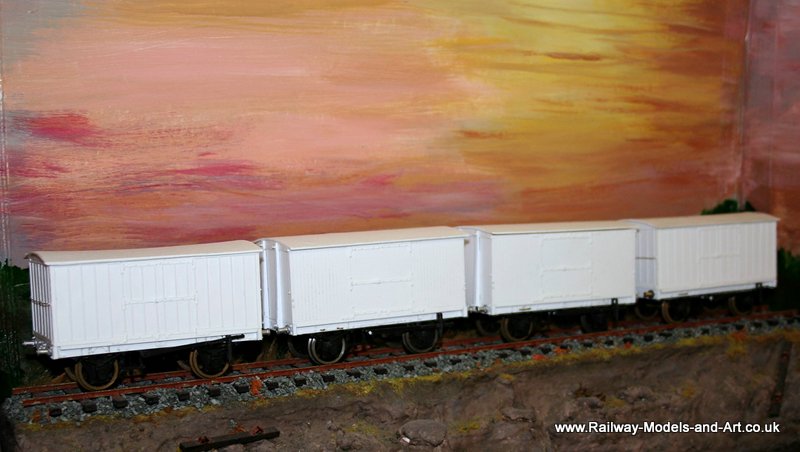
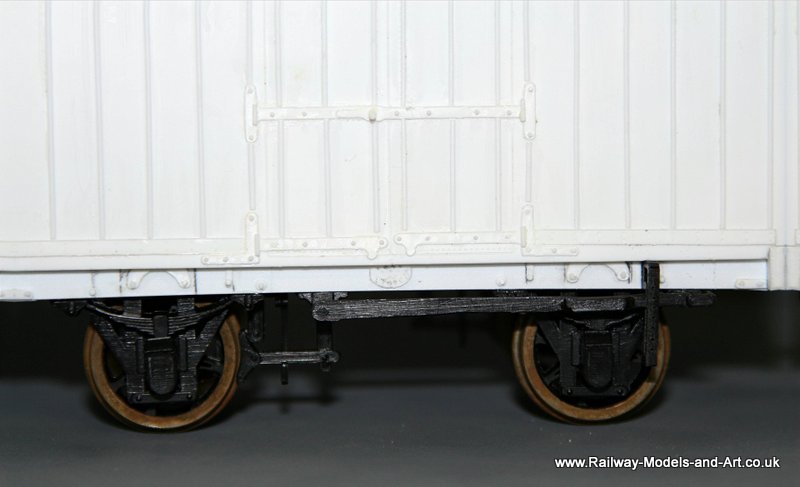
I am still struggling to take decent photos of the white plastic but her’s where we are up to.
Silhouette Cut NBR Jubilee Van

Silhouette Cut NBR Jubilee Van

Silhouette Cut NBR Jubilee Van

Silhouette Cut NBR Jubilee Van

Silhouette Cut NBR Jubilee Van

Silhouette Cut NBR Jubilee Van

Silhouette Cut NBR Jubilee Van

Silhouette Cut NBR Jubilee Van

The observant amongst you will have noticed the LNER plate peeking out from under the body  – I had a tinker to see if I could draw on  up and cut it successfully – reasoning that I could always get some etched from the art work if that didn’t work.
LNER Plate
Since cutting those shown on 10 thou I tried again on 20 thou which gave much better results although in the final cut I removed the small lettering in the middle just keeping LNER and the number – I am still struggling to get a decent photo so you may have to wait until they are on one of the other vans.

Playing about with image stacking

Last night I had a mess about with image stacking – I am quite pleased with the results so far. Each final image is made up from 5 original images combined into one.

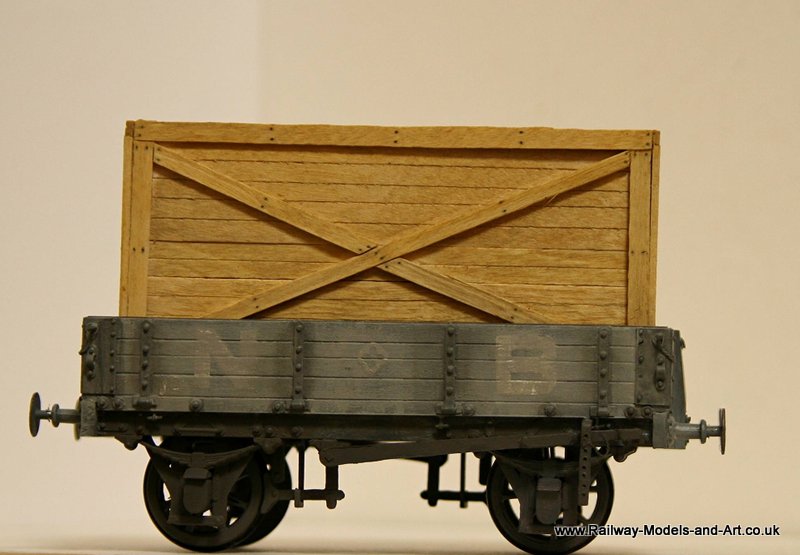
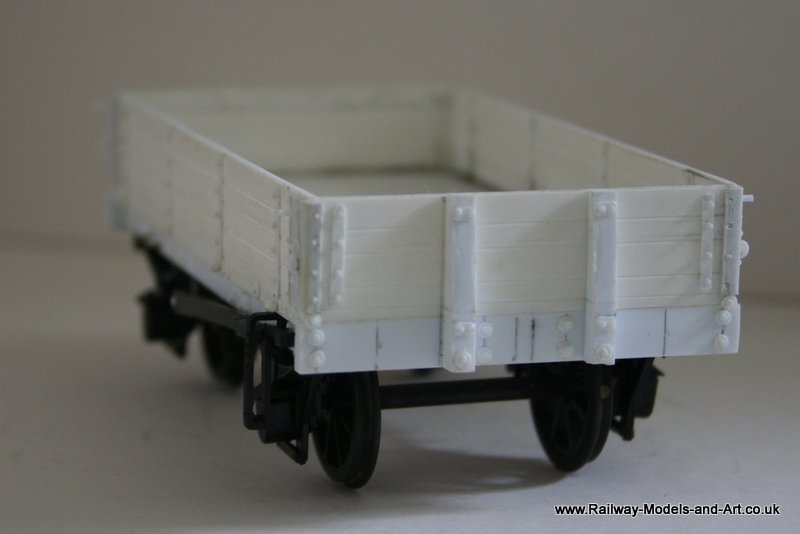
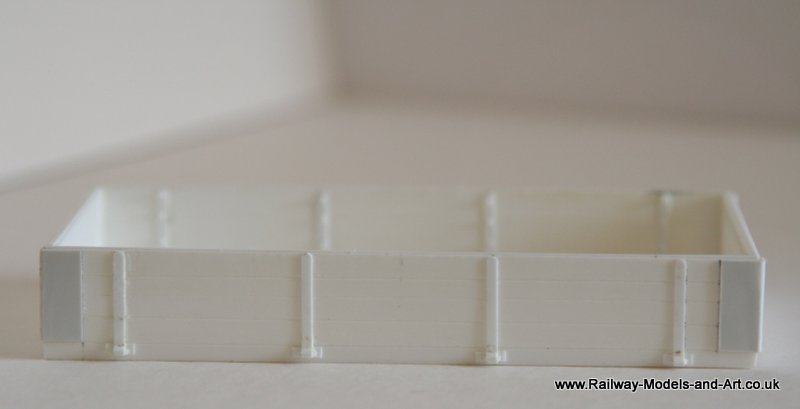
Scratch Built NBR 4 Plank Dropside Wagon

Scratch Built NBR 4 Plank Dropside Wagon

Parksdie NBR 4Plank Open

Parksdie NBR 4Plank Open

Parksdie NBR 4Plank Open

Parksdie NBR 4Plank Open

Slaters 7mm PO Salt Wagon

Slaters 7mm PO Salt Wagon

Slaters 7mm PO Salt Wagon

Slaters 7mm PO Salt Wagon

Scratch Built NBR 4 Plank Dropside Wagon

Scratch Built NBR 4 Plank Dropside Wagon

More from the NBR

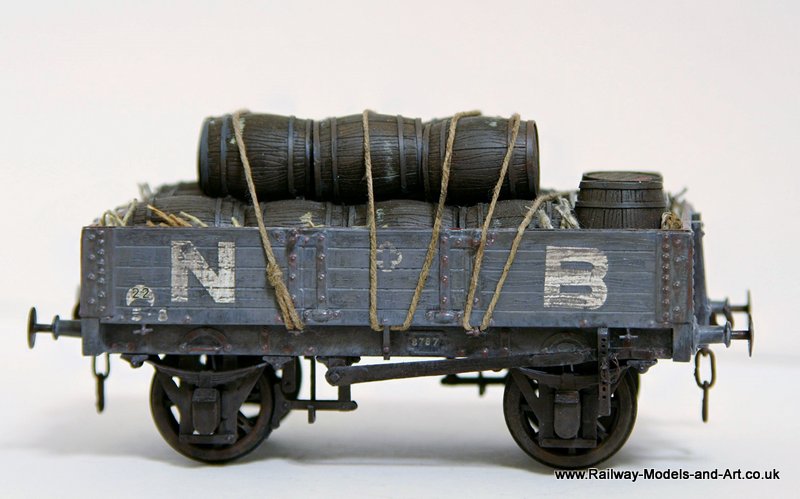
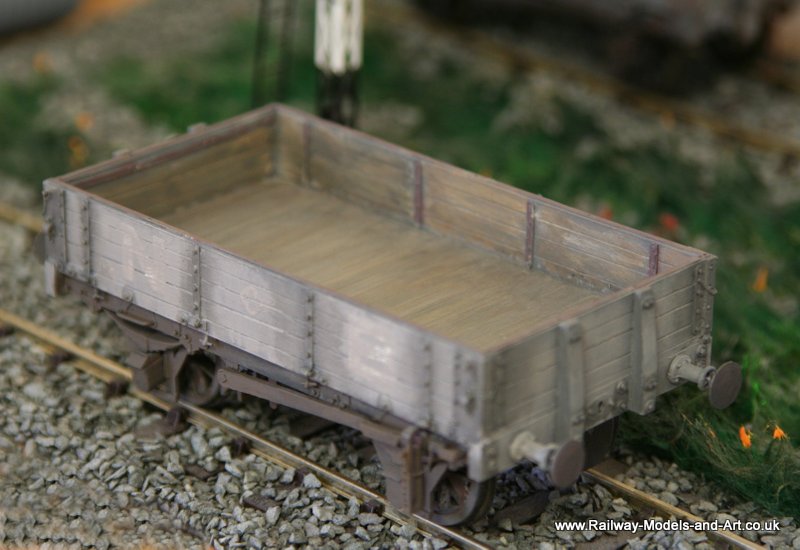
Although I haven’t managed any modelling while in Wakefield for what seems to be far too long I did manage a bit more painting and weathering over the weekend. Apart from couplings the NBR Dropside wagon is finished.
It’s not clearly visible anymore but I have added a paint date of ’19 in the crescent on the sides and weathered it based on photos of NBR 3 and 4 plank wagons in Tatlow.
Scratch Built NBR 4 Plan Dropside Wagon

Scratch Built NBR 4 Plan Dropside Wagon

Scratch Built NBR 4 Plan Dropside Wagon

Scratch Built NBR 4 Plan Dropside Wagon

Scratch Built NBR 4 Plan Dropside Wagon

Scratch Built NBR 4 Plan Dropside Wagon

Lastly I added it’s load after playing around painting that with some ‘wood’ coloured paint….
Scratch Built NBR 4 Plank Dropside wagon with assorted scratch built timber loads

Scratch Built NBR 4 Plank Dropside wagon with assorted scratch built timber loads

Scratch Built NBR 4 Plank Dropside Wagon

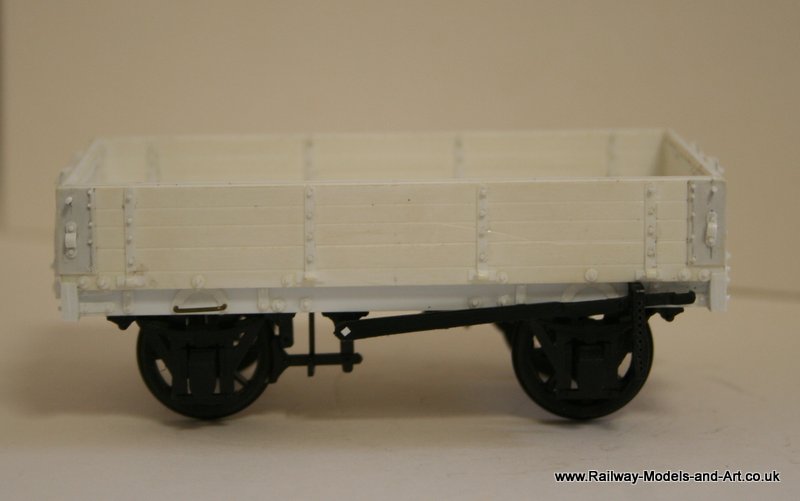
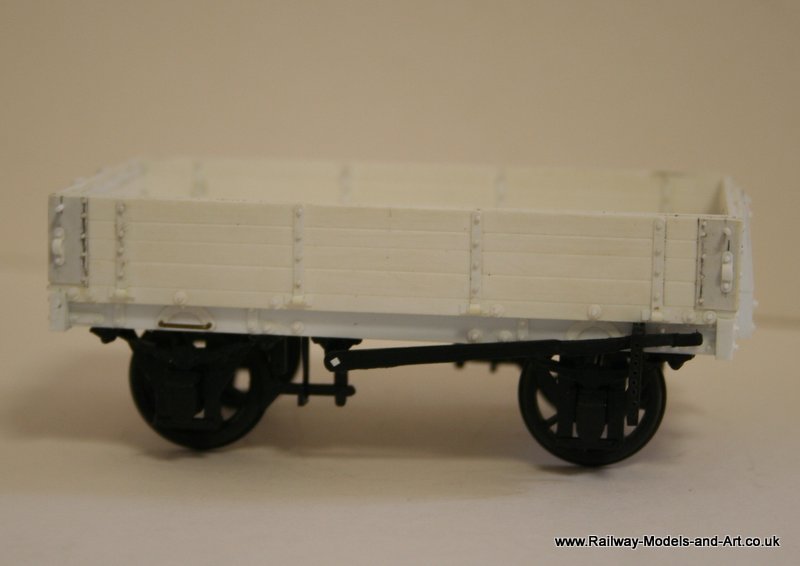
While I was off for the last week I also did more work on the NBR 4 plank Dropside wagon. It’s a good job that I did because since returning to Wakefield with big plans to crack on with the G5 my mojo seems to have taken a holiday too and no modelling has been done for the last couple of days:(.
Sorry about the poor quality of the photos the white styrene is quite difficult to photograph and I am not yet at the stage where I can give it a coat of primer.
Scratch Built NBR 4 Plank Dropside Wagon

Scratch Built NBR 4 Plank Dropside Wagon

Scratch Built NBR 4 Plank Dropside Wagon

Scratch Built NBR 4 Plank Dropside Wagon

Scratch Built NBR 4 Plank Dropside Wagon

Scratch Built NBR 4 Plank Dropside Wagon

Scratch Built NBR 4 Plank Dropside Wagon

Scratch Built NBR 4 Plank Dropside Wagon

Scratch Built NBR 4 Plank Dropside Wagon

Scratch Built NBR 4 Plank Dropside Wagon

The door bangers had me scratching my head – the Evergreen strip kept snapping as I bent it to shape (despite using a coat of solvent to soften it). My solution was to use the broken ends of styrene as the outer strap and cutting about 2/3rds of the circle from a small length of styrene tube to use for the main protruding part of the door banger.

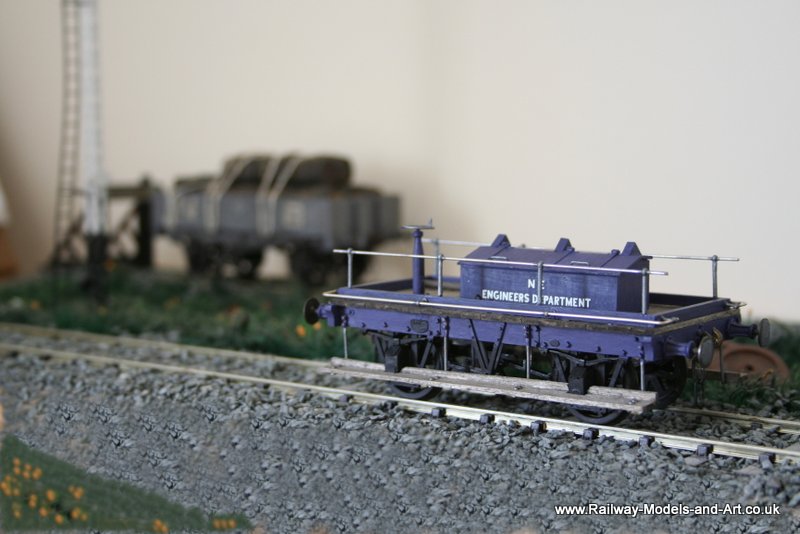
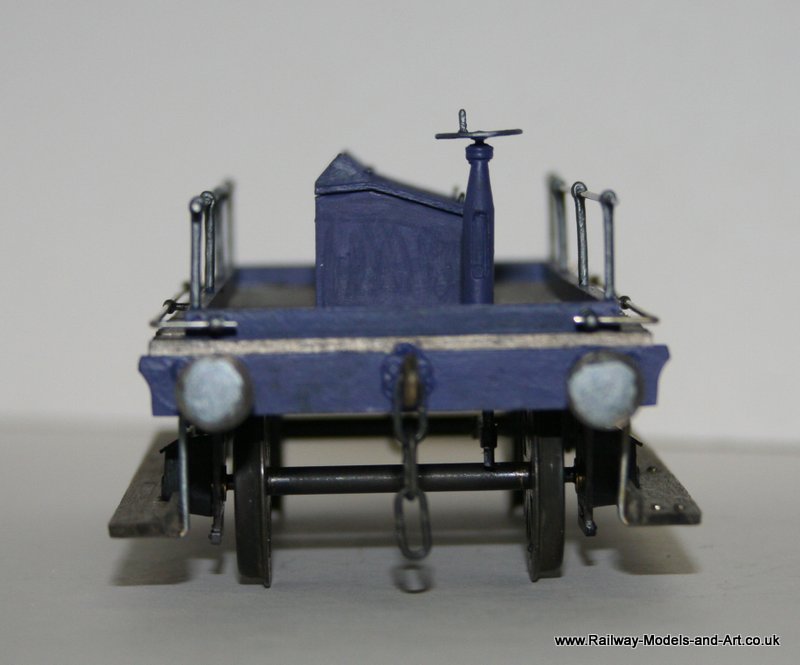
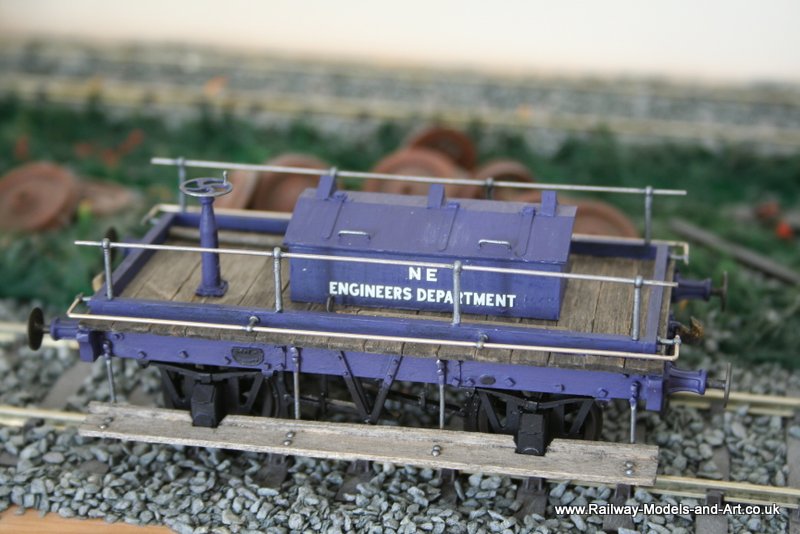
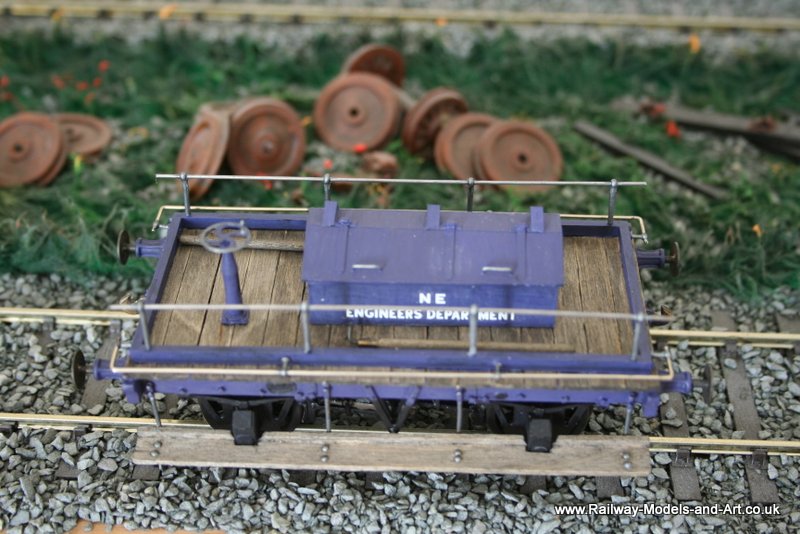
Scratch built NER Shunters Truck

While reading up on the WD wagon in Essery I also noted a few pictures of a Midland Railway shunters truck similar to the ones that the GWR had. I wondered if the LNER or it’s constituents had anything similar.
An enquiry on the LNER forum revealed that the GCR has a couple and the NER had built one. No photos or drawings have emerged for the GCR examples but by fortunate coincidence I had (unbeknown to me at the time) I had a copy of the drawing for the NER example which is included in the Railway Snowploughs in the North East book by David and Claire Williamson.
I had to use a bit of modellers license in this one because although the NER built it in 1902, in 1907 it was rebuilt into a double ended snowplough (hence it’s inclusion in the book).
This is a true multimedia build:
The floor and step boards are coffee stirrers
The rest of the timber work is styrene strip
The handrail stanchions are brass split pins with piano wire rails
Brass handrail  knobs and nickel wire make up the lower handrails.
The hand brake column is a Slaters casting
The W Irons and V hangers are Slaters from the spares box as are the axle boxes but I did modify them with styrene.
The springs and hangers are scratch built from styrene strip and angle
Buffers are Haywood Railway and the couplings are Parkside.
x-default

x-default

Scratch Built NER Shunters Truck

Scratch Built NER Shunters Truck

Scratch Built NER Shunters Truck

Scratch Built NER Shunters Truck

Scratch Built NER Shunters Truck

Scratch Built NER Shunters Truck

Scratch Built 7mm Scale NER Shunters Truck

Scratch Built 7mm Scale NER Shunters Truck

Scratch Built 7mm Scale NER Shunters Truck

Scratch Built 7mm Scale NER Shunters Truck

Scratch Built 7mm Scale NER Shunters Truck

Scratch Built 7mm Scale NER Shunters Truck

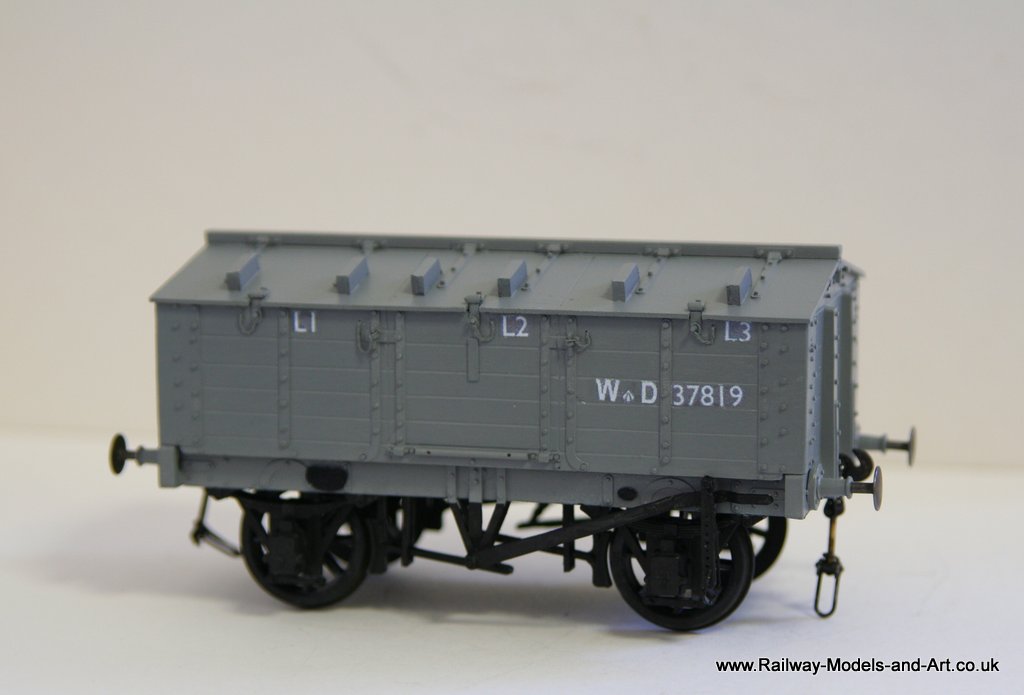
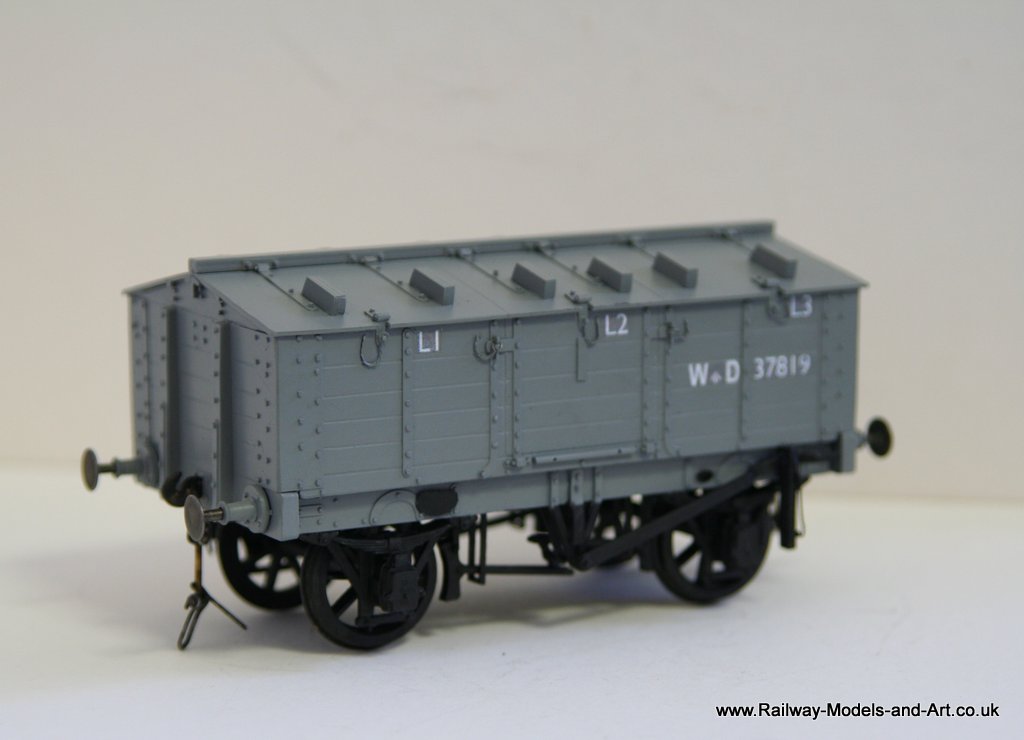
Midland-WD Locker Wagon

Well, my thoughts on MR or LMS transfers were sidetracked by not really getting to the bottom of what these wagons might have been used for post war. That and a friend coming up with the suggestion of finishing it in W^D livery with secret contents – along the lines of “if I tell you what it’s carrying I would have to kill you”. Anyone who knows me well will understand how much this appealed to my sense of humour so here we are.


Midland-WD Locker Wagon

Midland-WD Locker Wagon

Midland-WD Locker Wagon

Midland-WD Locker Wagon

Once again the transfers are home made and printed on white decal paper.

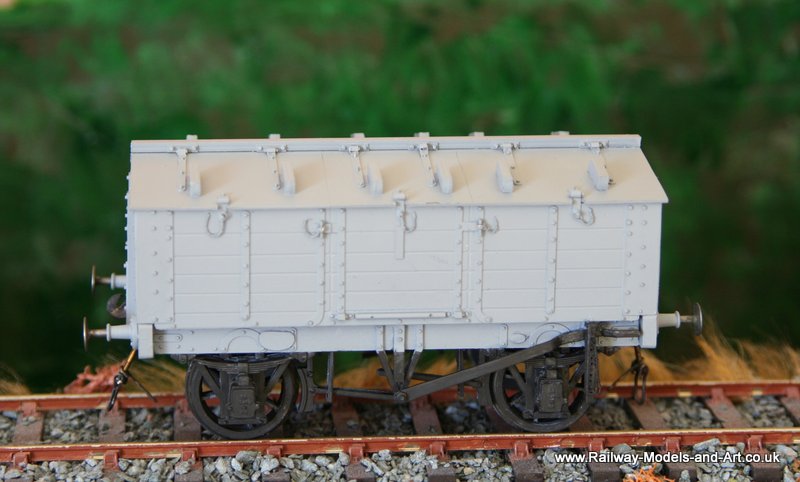
Conversion of a Slaters Gloucester 5 Plank Open into a Midland Railways ex WD Locker Wagon

Help,  I’ve become a bolt counter…..
During the last two trips up north while waiting for underframe parts from Parkside for the NBR wagons I made a start on a conversion of a Slaters Gloucester 5 Plank open to this –
Midland-WD wagon
This is a scan of part a page from Essery’s Midland Wagons Vol one and copyright in the book is attributed to British Rail. Shown her purely to illustrate what I am attempting to replicate.
Next is a shot of the Slaters Gloucester 5 Plank side, end and solebars so that you can see what I needed to change to get to where I wanted to be…
Slaters original Gloucester 5 Plank parts. Midland-WD Locker wagon Midland-WD Locker wagon Midland-WD Locker wagon

NBR Open Wagons

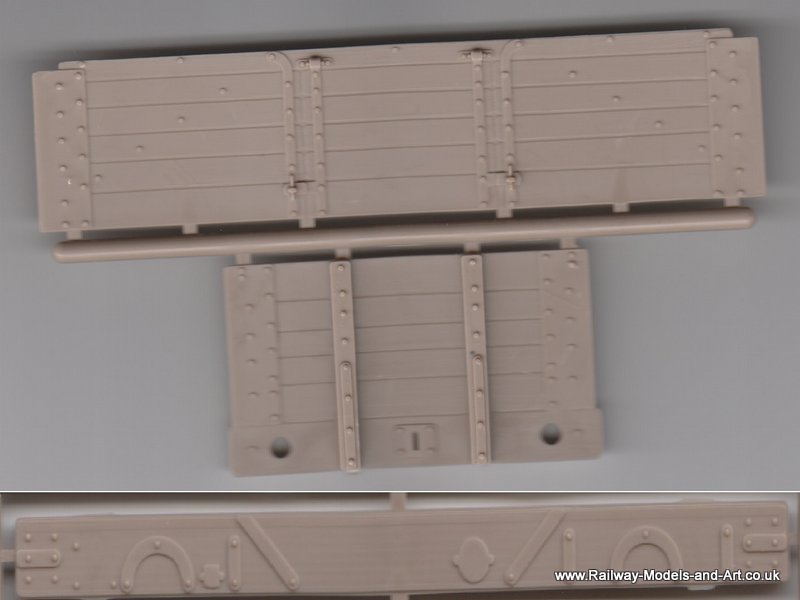
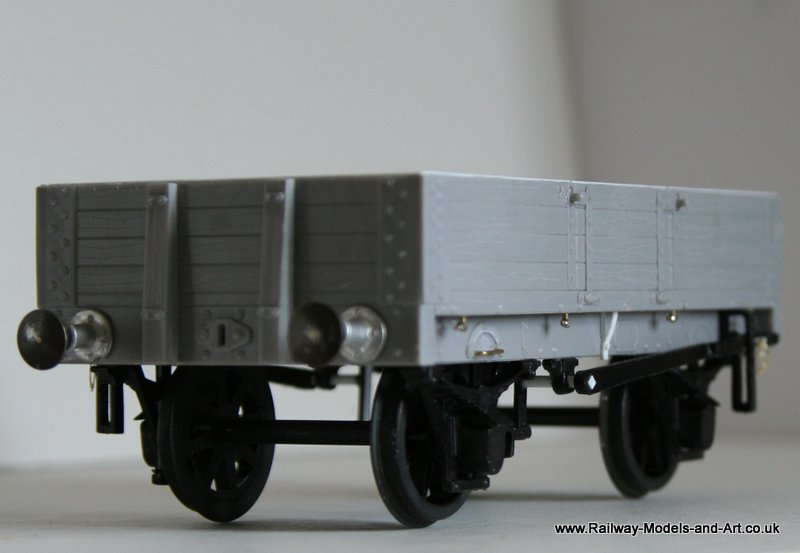
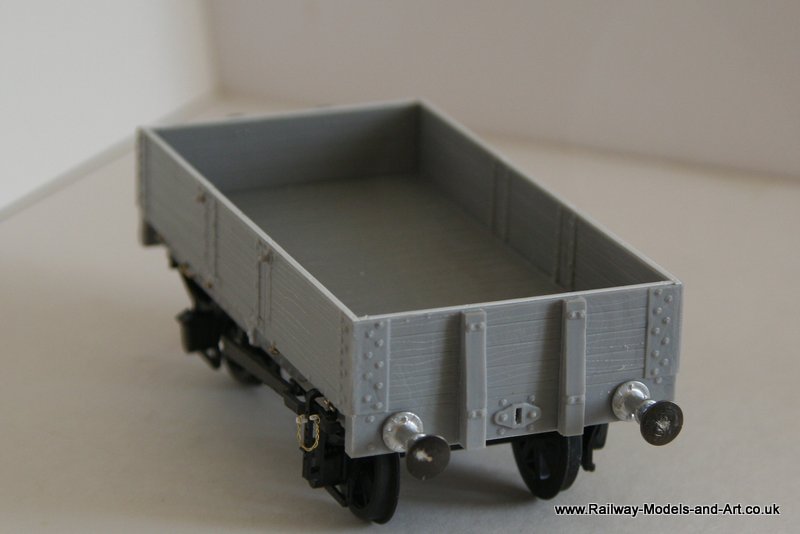
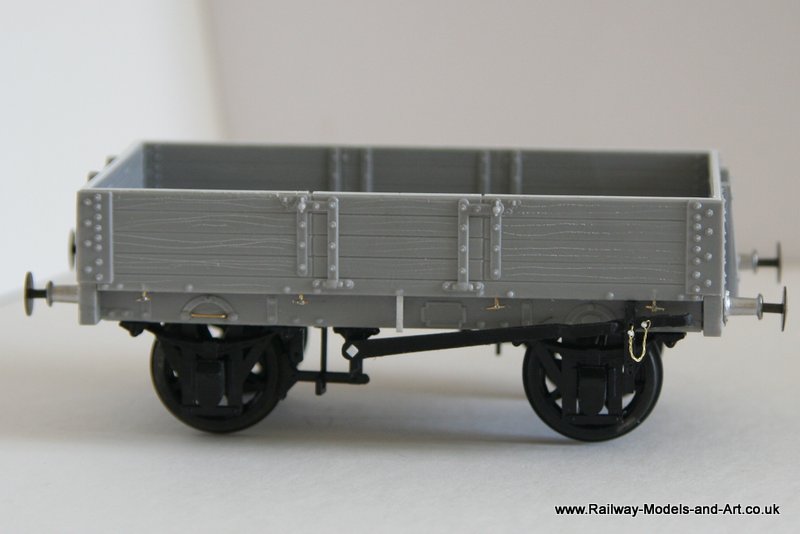
This weekend’s endeavours was the build of a Parkside NBR 4 plank open wagon with side doors.

A look through Tatlow volume 3 revealed that these wagons came as 3 and 4 plank, fixed sides, drop sides and the side door versions which is a nice amount of variety – and prompted me to make a start on the body of drop door version. My idea is to buy some set of underframe sprues from Parkside (and perhaps some buffer sets). The kit itself is a nice kit if a little basic which works for me – again Tatlow revealing more details to be added from plastic strip etc.

IMG_7475

The rope hooks are made from some brass pins that I bought a few years ago that have odd shaped heads. Odd shaped in the the heads are lop sided and no amount of turning will make them round and sat square on the ends of the pins for use as bolts or rivets etc. A recent experiment had me annealing the head, then squashing it in a pair of smooth jawed pliers before drilling a hole in the end and using them as eye bolts. In this case a cross pin was soldered in to give a representation of the rope hooks. I also carved off the moulded horse hooks and added a piece of bent wire.

IMG_7471

The chain and pin for the brake lever guard are made from plastic rod/fine brass wire – again the end squashed and cross drilled. What is interesting is that on many of these wagons the chain is attached to the lever itself at one end.

IMG_7470

More plastic strip was added for the top capping.

IMG_7469

IMG_7467

And finally a couple of shots of progress on the dropside version

IMG_7472 IMG_7473